Indoor plant stands for multiple plants solve one of the biggest challenges for plant enthusiasts: how to display a growing collection without cluttering surfaces or blocking natural light. A well-chosen stand consolidates plants vertically, creates visual interest, and protects floors and furniture from water damage. Whether working with a bright corner, a narrow hallway, or an underutilized wall, the right stand turns scattered pots into an intentional display. This guide breaks down styles, materials, weight capacity, and styling strategies to help homeowners choose and set up multi-plant stands that work with their space and growing collection.
Table of Contents
ToggleKey Takeaways
- Indoor plant stands for multiple plants maximize vertical space while protecting floors from water damage and improving light distribution across varied plant heights.
- Choose stands based on weight capacity, footprint, and material—metal stands offer durability for humid spaces, wood provides warmth but needs sealing, and proper drainage solutions are essential for any setup.
- Group plants by light and moisture needs rather than appearance, use odd numbers for dynamic visual arrangement, and vary pot sizes and foliage textures to create an intentional, professional-looking display.
- Tall multi-plant stands over 4 feet or holding more than 50 lbs should be secured to wall studs with L-brackets to ensure stability and safety, especially in homes with children or pets.
Why Multiple-Plant Stands Are a Game-Changer for Indoor Gardeners
Multi-plant stands address practical problems that single-pot solutions can’t. First, they maximize vertical space, which matters in apartments, small homes, or rooms where floor space is limited. A ladder-style stand that’s 18 inches wide and 5 feet tall can hold six to eight plants in the footprint of a single floor pot.
Second, they improve light distribution. Tiered designs position plants at varying heights, so trailing pothos or string-of-pearls don’t shade out lower succulents. This matters for light-hungry varieties that need unobstructed exposure to south- or west-facing windows.
Third, proper stands include water-resistant finishes or drip trays, protecting hardwood floors, carpets, and furniture from moisture damage. Unfinished wood or raw metal will warp, rust, or stain over time when exposed to drainage and humidity.
Finally, stands simplify maintenance and airflow. Elevated plants are easier to water, inspect for pests, and prune. Air circulation around each pot reduces the risk of fungal issues and root rot, especially for varieties like ferns or calatheas that need consistent humidity but hate sitting in stagnant moisture.
For renters, freestanding units offer flexibility. They don’t require wall anchors or modifications, so they’re easy to move or take along during a lease change.
Types of Indoor Plant Stands for Multiple Plants
Tiered and Ladder-Style Stands
Tiered stands feature shelves or platforms arranged in a stepped or staggered layout. Common configurations include three, four, or five tiers, typically spaced 10–14 inches apart vertically. Materials range from powder-coated steel (durable, modern look, holds 15–30 lbs per shelf), bamboo or pine (lighter weight, better for small pots under 6 inches), and wrought iron (decorative, handles heavier ceramic pots).
These work well for plant collections with varying light needs. Position sun-lovers on upper tiers near windows, shade-tolerant varieties lower down. Look for stands with adjustable shelf heights if pot sizes vary.
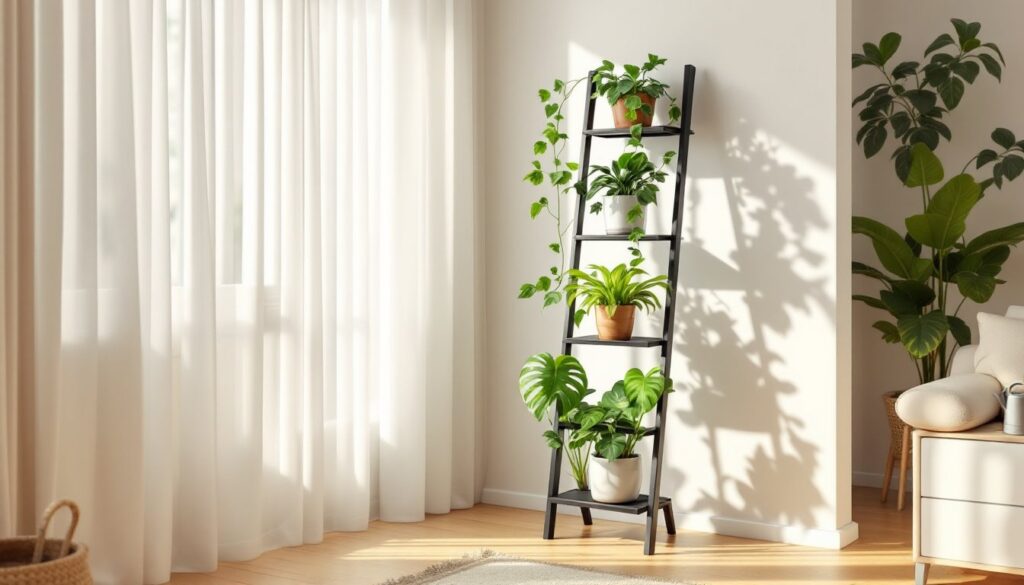
Ladder-style stands lean against a wall at a slight angle, with rungs or shelves spaced evenly along the frame. Most measure 5–6 feet tall and 16–20 inches wide. The angled design uses wall support for stability, but it’s not a replacement for proper weight distribution. Don’t overload top rungs with heavy ceramic pots, keep larger plants on lower shelves to prevent tipping.
Builders comfortable with basic woodworking can construct ladder stands using 2×4 nominal lumber (actual dimensions 1.5″ x 3.5″) for the frame and 1×6 pine boards for shelves. Free plans from resources like Ana White’s planter stand designs show how to assemble simple raised stands using pocket screws and outdoor wood glue. Apply a water-resistant polyurethane or exterior stain to protect against spills.
Corner and Space-Saving Designs
Corner stands fit into 90-degree angles, using space that’s often wasted. These typically feature triangular or fan-shaped shelves, ranging from two to five tiers. Corner units are ideal for small rooms, bathrooms with extra floor space, or kitchens with unused nooks.
Most corner stands measure 30–40 inches tall and 12–18 inches per side. Check the shelf depth, shallow shelves (under 8 inches) only fit 4-inch pots, while 10–12-inch shelves accommodate standard 6-inch nursery pots with room for drainage trays.
Wall-mounted and hanging racks eliminate floor space entirely. Floating shelves with brackets rated for 50+ lbs (look for models with wall anchors into studs, not just drywall anchors) can hold multiple small to medium pots. Hanging tiered systems use macramé or metal chains to suspend pots vertically from a ceiling hook.
For renters or those avoiding wall penetration, tension pole stands (floor-to-ceiling spring-loaded poles with adjustable arms) support multiple plants without drilling. Ensure the ceiling can handle the pressure, suspended ceilings or older plaster may not provide adequate resistance.
Folding or collapsible stands suit seasonal displays or temporary setups. These usually hold lighter loads (under 40 lbs total) and work best for propagation stations or seedling trays rather than mature plants in heavy ceramic pots.
How to Choose the Right Plant Stand for Your Home
Start with weight capacity. Add up the weight of filled pots, not just the plants. A 6-inch terracotta pot with moist soil weighs 4–6 lbs: a 10-inch ceramic pot can hit 15–20 lbs. If the stand lists a total capacity (e.g., 80 lbs), divide that across shelves and leave a safety margin, don’t load it to 100%.
Measure the available footprint before shopping. A ladder stand needs 18–24 inches of floor space and leans 12–18 inches from the wall at the top. Corner units require access from at least one side for watering. In high-traffic areas like hallways or entryways, choose narrow profiles (under 12 inches deep) to avoid becoming an obstacle.
Material choice depends on room conditions and aesthetic:
- Metal (steel, wrought iron, aluminum): Highest weight capacity, durable, works in humid spaces like bathrooms or basements. Powder coating prevents rust: bare or painted finishes will corrode near water sources.
- Wood (bamboo, pine, oak, teak): Warm appearance, moderate weight capacity (10–15 lbs per shelf for softwoods, 20–30 lbs for hardwoods). Requires sealed or finished surfaces to resist moisture. Bamboo offers good strength-to-weight ratio.
- Rattan or wicker: Lightweight, decorative, best for dry rooms and smaller pots. Not suitable for heavy watering routines or high-humidity plants.
Check for drainage solutions. Some stands include built-in trays or lips to catch overflow: others require separate saucers under each pot. Without proper drainage management, water will drip onto lower plants, shelves, and floors.
Stability features matter for safety, especially in homes with kids or pets. Look for:
- Wide bases or cross-bracing on freestanding units
- Anti-tip straps or wall anchors for tall ladder stands (attach to studs using 3-inch wood screws)
- Rubber or felt feet to prevent sliding on hardwood or tile
If the room gets direct sun, avoid dark metal stands, they absorb heat and can stress roots in adjacent pots. Light-colored or wood finishes reflect more heat.
For DIYers, building a custom stand allows exact sizing and finish control. Platforms like Fix This Build That and Instructables feature step-by-step plans for tiered plant stands using basic tools like a circular saw, drill, and level. Wear safety goggles and a dust mask when cutting lumber, and pre-drill holes to prevent splitting.
Creative Styling Tips for Multi-Plant Displays
Group plants by similar care needs rather than just appearance. Stands near south-facing windows suit cacti, succulents, and sun-loving herbs. East-facing setups work for ferns, calatheas, and other moderate-light plants. Don’t mix a moisture-loving fern with a drought-tolerant jade on the same shelf if watering schedules conflict.
Vary pot sizes and heights to create visual rhythm. Place larger pots (8–10 inches) on lower shelves, smaller pots (4–6 inches) higher up. Mix trailing plants like pothos or ivy on upper tiers so vines cascade downward, with upright growers like snake plants or ZZ plants on middle shelves.
Use odd numbers, three, five, or seven plants, for more dynamic arrangements. Even numbers can look too symmetrical or formal unless that’s the intended style.
Mix textures and foliage types: pair broad-leafed plants (elephant ear, monstera) with fine-textured varieties (asparagus fern, maidenhair fern), or contrast spiky plants (dracaena, yucca) with rounded forms (peperomia, pilea).
Consider pot coordination. Matching pots create a clean, cohesive look: mismatched pots add eclectic charm. If going with varied pots, tie the display together with a consistent color palette (e.g., all earth tones, all white and gray, all terracotta).
Add functional accessories: small LED grow lights clipped to upper shelves extend daylight hours in winter, humidity trays filled with pebbles and water boost moisture for tropical plants, and miniature fans improve air circulation to prevent mold.
For seasonal interest, rotate plants based on blooming cycles or foliage color changes. Swap in African violets or orchids when they flower, then return them to a brighter spot once blooms fade.
Safety reminder: Secure tall or top-heavy stands to wall studs if they exceed 4 feet in height or hold more than 50 lbs total. Use L-brackets or furniture anchor straps, especially in earthquake-prone regions or homes with pets and children.
Conclusion
Choosing the right indoor plant stand for multiple plants comes down to matching capacity, footprint, and material to the space and collection. Measure carefully, prioritize stability and drainage, and group plants by care needs for long-term success. A well-selected stand doesn’t just organize, it turns a collection into a focal point that’s easier to maintain and enjoy daily.