If your GE refrigerator has started dispensing water that tastes off or ice that looks cloudy, there’s a good chance your RPWFE filter is past its prime. This small but critical component sits inside your fridge, quietly removing contaminants from your drinking water and ice. Unlike older GE filters, the RPWFE model includes an embedded RFID chip that communicates with newer refrigerators to track filter life and ensure authentic replacements. Whether you’ve just bought a new GE French-door model or you’re staring at a blinking filter light, this guide walks through everything needed to install, maintain, and troubleshoot the RPWFE filter, no service call required.
Table of Contents
ToggleKey Takeaways
- The GE RPWFE refrigerator water filter features an embedded RFID chip that authenticates genuine filters and automatically tracks filter life for newer GE models manufactured from 2017 onward.
- Proper installation of the GE RPWFE filter takes about five minutes and requires flushing 2–3 gallons of water through the dispenser to remove carbon fines and air pockets before use.
- Replace your RPWFE filter every six months or after 300 gallons of dispensed water, whichever comes first, and pay attention to warning signs like slow flow, off-taste water, or a persistent filter light.
- Purchase RPWFE filters only from authorized sources like GE Appliances Parts, major retailers such as Lowe’s and Home Depot, or verified Amazon sellers to avoid counterfeits that lack proper RFID chips or NSF certification.
- The RPWFE filter is not backward-compatible with older GE refrigerators that require the RPWF model, so always verify your fridge’s model number and manufacturing date before ordering a replacement.
What Is the GE RPWFE Water Filter and Why Does It Matter?
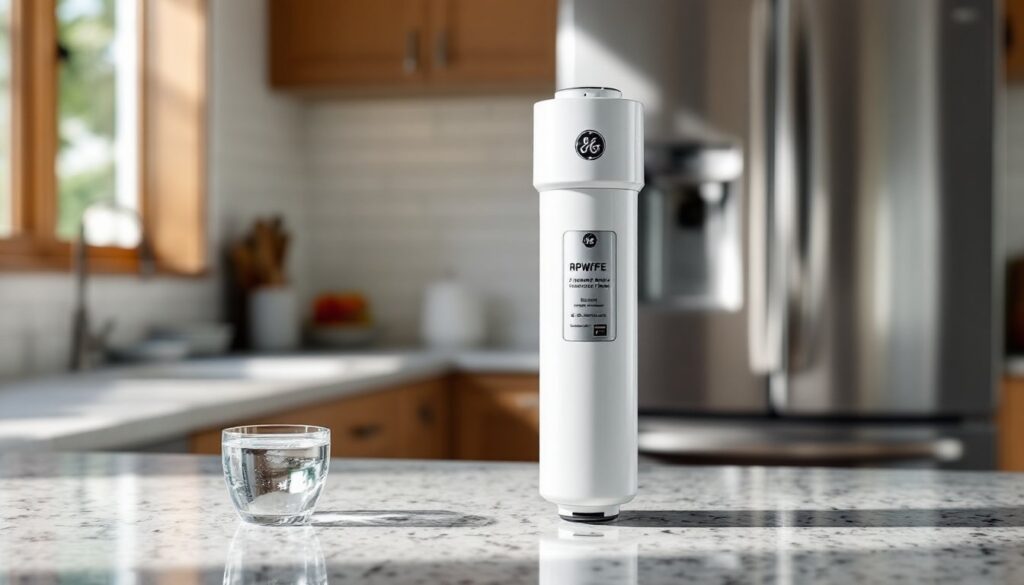
The GE RPWFE is a twist-in refrigerator water filter designed for select GE French-door and side-by-side models manufactured from 2017 onward. It replaces the older RPWF filter and introduces a critical upgrade: an embedded RFID chip that authenticates the filter and syncs with the refrigerator’s internal monitoring system.
This chip serves two purposes. First, it verifies that you’re using a genuine GE filter, not a knockoff. Second, it tracks the volume of water dispensed and calculates remaining filter life, triggering a dashboard light when replacement is due. Without the chip, many newer GE refrigerators won’t recognize the filter, even if it fits physically, and may restrict water flow or display error messages.
The RPWFE filter is certified to NSF/ANSI Standard 42 for chlorine taste and odor reduction, and NSF/ANSI Standard 401 for emerging contaminants such as certain pharmaceuticals, pesticides, and industrial chemicals. It’s rated to filter up to 300 gallons or six months of typical household use, whichever comes first.
For homeowners with older GE models, the RPWFE isn’t backward-compatible, those units still require the RPWF or earlier variants. Always check your refrigerator’s model number (usually found on a sticker inside the fresh-food compartment or on the left wall) and cross-reference it with GE’s compatibility chart before ordering.
How to Install Your GE RPWFE Filter in 5 Simple Steps
Installing the ge refrigerator water filter rpwfe is straightforward and doesn’t require tools. Plan for about five minutes, plus time to flush the system afterward.
What you’ll need:
- New RPWFE filter
- Towel or small bucket (to catch drips)
- A pitcher or container (for flushing)
Step-by-step installation:
-
Locate the filter housing. On most GE French-door models, the filter sits in the upper-right corner of the fresh-food compartment. Push the eject button or release tab: the old filter will partially pop out.
-
Remove the old filter. Twist counterclockwise about a quarter-turn, then pull straight out. Expect a few ounces of water to drip, keep the towel handy. If the filter is stuck, don’t force it: double-check you’ve twisted far enough and verify the release tab is fully depressed.
-
Prepare the new filter. Remove any protective caps or seals from both ends of the RPWFE cartridge. Do not remove the RFID chip label on the filter body, it’s essential for operation.
-
Insert and lock the new filter. Slide the filter straight into the housing until it stops, then twist clockwise a quarter-turn until it clicks and locks. The filter should sit flush with the housing: if it protrudes, it’s not fully seated.
-
Flush the system. Dispense and discard 2 to 3 gallons of water through the door dispenser. This clears carbon fines and air pockets. The water may look cloudy or sputter at first, that’s normal. Continue flushing until the flow is steady and clear. Reset the filter indicator light by holding the “Filter Reset” button (or “Ice/Water” button, depending on your model) for three seconds.
Many homeowners skip or rush the flush step, which can leave black specks (harmless carbon dust) in the first few glasses. Don’t shortcut this, it’s worth the two minutes.
When to Replace Your RPWFE Filter (And Signs You’re Overdue)
GE recommends replacing the RPWFE filter every six months or after 300 gallons of dispensed water, whichever comes first. In households with heavy ice and water usage, families of four or more, or homes that host frequently, you may hit 300 gallons well before six months.
Most GE refrigerators with RFID-compatible systems will illuminate a yellow or red filter light on the dispenser panel when it’s time to swap filters. Yellow typically means “replace soon,” while red indicates “replace now.” Don’t ignore the red light, continuing to use an exhausted filter means you’re drinking unfiltered tap water, just with added resistance and slower flow.
Warning signs you’re overdue for a replacement:
- Slow water flow or weak ice production. A clogged filter restricts flow, causing the dispenser to trickle or the icemaker to underproduce.
- Off-taste or odor. If water tastes metallic, chlorinated, or musty, the activated carbon is saturated and no longer adsorbing contaminants.
- Cloudy or discolored ice. Sediment or minerals bypassing the filter can cloud ice cubes or leave visible particles.
- Persistent filter light. If the light stays on after a reset, the fridge isn’t detecting a valid RFID chip, either the filter is counterfeit, installed incorrectly, or genuinely expired.
In regions with hard water or high sediment levels, filters may clog faster than the six-month guideline. If you notice flow issues before the indicator light triggers, go ahead and replace early. Trying to extend filter life beyond its rated capacity doesn’t save money, it just compromises water quality and puts unnecessary strain on the refrigerator’s water valve.
RPWFE vs. RPWF: Understanding the Key Differences
The RPWF and RPWFE filters look nearly identical and use the same twist-lock housing design, but they’re not interchangeable on all models. The core difference is the RFID chip.
RPWF (older model):
- No embedded chip
- Compatible with GE refrigerators manufactured roughly 2014–2017
- Filter indicator resets manually: no authentication required
- Typically certified to NSF 42 (taste/odor) and NSF 53 (lead, cyst reduction)
RPWFE (current model):
- Embedded RFID chip for authentication and automatic tracking
- Required for GE models from 2017 onward that support chip-based monitoring
- Additional NSF 401 certification (emerging contaminants)
- Will not work in non-RFID refrigerators, physical fit doesn’t guarantee function
If you try to install an RPWF filter in an RFID-equipped fridge, the unit may display an error code, restrict water flow, or refuse to reset the filter light. Conversely, using an RPWFE in an older, non-RFID model wastes money, you’re paying for a chip the fridge can’t read.
Check your refrigerator’s model number and manufacturing date. GE’s parts lookup tool on their support site will confirm which filter your unit requires. If your fridge originally shipped with an RPWF, stick with it. If it came with an RPWFE or you’ve upgraded to a newer model, the RPWFE is mandatory.
Troubleshooting Common RPWFE Filter Issues
Even with a fresh filter, hiccups can happen. Here’s how to diagnose and fix the most common RPWFE problems.
Filter light won’t reset:
First, confirm you’ve installed a genuine GE RPWFE with an intact RFID label. Aftermarket filters, even high-quality ones, often lack the chip or use incompatible versions. Next, ensure the filter is fully seated and locked (twist until it clicks). If the light persists, unplug the refrigerator for 60 seconds to hard-reset the control board, then plug it back in and try the reset button again. In rare cases, dirt or moisture on the RFID contacts inside the housing can block communication, wipe the housing interior with a dry cloth and reinstall.
Slow water flow after installation:
Nine times out of ten, this means you haven’t flushed enough. Run another gallon or two through the dispenser. If flow is still weak, check the household water supply valve (usually behind or beneath the fridge) to verify it’s fully open. Low inlet pressure, common in homes with older plumbing or multiple fixtures running, can also throttle flow. For persistent issues, inspect the water line for kinks or ice buildup in the freezer section. According to appliance maintenance guides, a kinked quarter-inch supply line can cut flow by more than half.
Leaking filter:
A drip from the filter housing usually means the O-ring seal is misaligned or damaged. Remove the filter, inspect the rubber gasket on the filter’s base, and check for cracks or debris. Wipe both the gasket and the housing’s mating surface clean, then reinstall with a firm quarter-turn twist. If the leak continues, the housing itself may be cracked, this requires a service call or replacement part (GE part number varies by model).
“Replace filter” message immediately after install:
This points to a counterfeit or defective filter. Verify you purchased from an authorized retailer (see next section). If the filter is genuine and the message appears, the RFID chip may be faulty, contact GE or the seller for a replacement under warranty.
Where to Buy Genuine GE RPWFE Filters and What to Avoid
Genuine RPWFE filters retail for approximately $50–$60 each as of 2026, though prices fluctuate with promotions and regional availability. You can purchase directly from GE Appliances’ parts store, major home-improvement retailers (Lowe’s, Home Depot), appliance specialty shops, and online marketplaces like Amazon.
Authorized sources:
- GE Appliances Parts & Accessories (geapplianceparts.com): Factory-direct, always genuine
- Major retailers: Look for “Sold by [Retailer Name]” or “Shipped by Amazon” listings to minimize counterfeit risk
- Local appliance dealers: Often stock filters and can verify compatibility on the spot
Red flags for counterfeits:
- Price significantly below $45 (too good to be true usually is)
- Third-party sellers with limited reviews or recent storefronts
- Packaging that looks photocopied, misspelled, or lacks GE’s holographic authenticity seal
- Listings that say “compatible with RPWFE” rather than “GE RPWFE”
Counterfeit filters pose two risks. First, they often lack the RFID chip or use a bootleg version that triggers error codes. Second, their filtration media may not meet NSF standards, you could be drinking unfiltered water while thinking you’re protected. Independent testing by consumer groups, including product reviewers, has found some knockoffs remove less than 30% of chlorine compared to genuine filters’ 97%+ reduction.
If you’re committed to saving money, consider GE’s own XWF or XWFE filters for compatible models, they’re often discounted and still genuine. Some homeowners buy multi-packs during holiday sales to lock in lower per-unit costs. Just verify your refrigerator’s compatibility before bulk-buying.
For additional kitchen appliance maintenance strategies, appliance care resources provide seasonal checklists that pair water-filter replacement with other routine tasks like condenser coil cleaning and door-seal inspections.
Conclusion
The GE RPWFE refrigerator water filter is a small investment that delivers cleaner drinking water, better-tasting ice, and peace of mind. Stick to the six-month replacement schedule, buy genuine filters from trusted sources, and don’t skip the post-install flush. If the filter light blinks or flow slows, address it promptly, waiting only compounds the problem. With the steps and troubleshooting tips above, maintaining your GE refrigerator’s water system is as simple as a twist and a flush.