Indoor air quality isn’t just a talking point, it’s a daily reality for anyone dealing with dust, pet dander, pollen, or cooking odors. The Mila air purifier entered a crowded market with a different pitch: filters that swap out based on what you’re actually dealing with, plus smart features that adjust automatically. But does it deliver for homeowners looking to clean their air without overcomplicating their space? This review breaks down how Mila performs in real-world conditions, what sets it apart from standard HEPA-box competitors, and whether its modular filter system and app control justify the investment for your home.
Table of Contents
ToggleKey Takeaways
- The Mila air purifier stands out with interchangeable filter cartridges designed for specific concerns like pet dander, mold spores, wildfire smoke, and VOCs, eliminating the need for a one-size-fits-all approach.
- Smart automation features including real-time AQI integration, auto-adjusting fan speeds, and app-based House Rules mean Mila works in the background without daily manual adjustments.
- At 500 square feet coverage with HEPA-grade filtration capturing 99.97% of particles at 0.3 microns, the Mila air purifier performs well for bedrooms, home offices, and single-room spaces, though larger homes require multiple units.
- The subscription filter model costs $30–$45 per replacement every six months, which is competitively priced but adds ongoing expenses that differ from traditional one-time filter purchases.
- Setup takes under 10 minutes with no tools required, making the Mila air purifier accessible for DIY homeowners, though Wi-Fi connectivity is limited to 2.4 GHz networks only.
What Makes the Mila Air Purifier Different?
Most air purifiers follow the same playbook: a single HEPA filter, manual speed controls, and maybe a timer. Mila flips that approach by offering interchangeable filter cartridges designed for specific concerns, wildfire smoke, mold spores, pet allergens, or VOCs from paint and cleaning products.
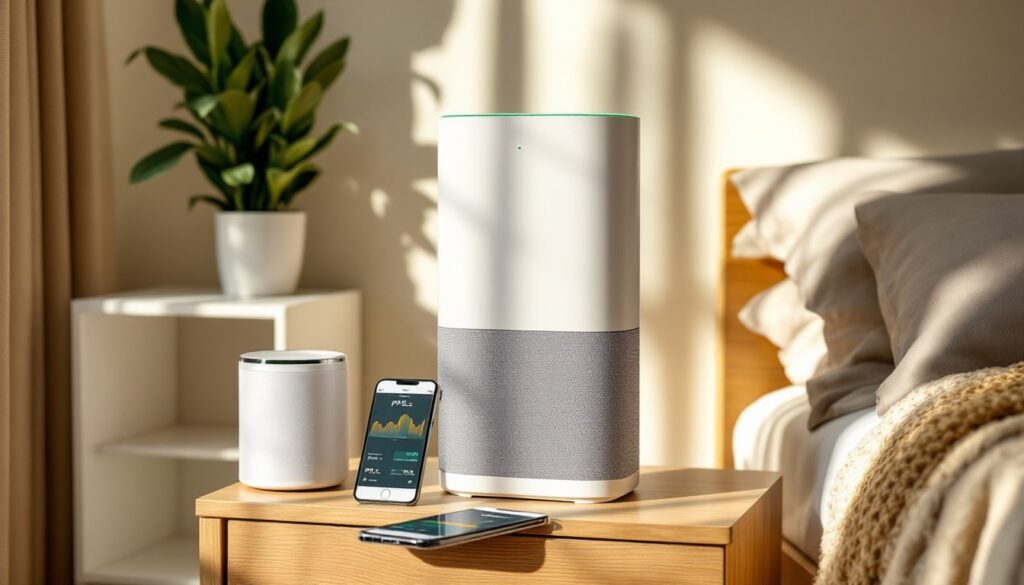
The unit itself is a vertical tower design, standing about 15 inches tall and weighing roughly 7 pounds. It’s compact enough to sit on a nightstand or console without dominating the room. The housing is impact-resistant ABS plastic with a fabric-wrapped intake grille that doesn’t feel cheap.
What really distinguishes Mila is the filter subscription model. Instead of hunting down replacements on Amazon or at big-box stores, users choose a filter type during setup, and replacements arrive on a schedule based on actual usage tracked by the unit. The filters slide in from the bottom without tools, no screws, no clips. Homeowners who’ve dealt with stubborn filter covers on older purifiers will appreciate the simplicity.
The smart integration goes beyond basic app control. Mila connects to local air quality data and indoor sensors to adjust fan speed automatically. It’s not marketing fluff: the unit ramps up when outdoor AQI spikes or when it detects cooking smoke, then quiets down once readings normalize.
Key Features and Smart Technology
Mila runs on a brushless DC motor that adjusts across six fan speeds, from a near-silent “Whisper” mode to a full-blast “Turbo” setting. At low speeds, it registers around 25 dB, quieter than a bedroom at night. Turbo mode hits about 55 dB, comparable to normal conversation volume.
The onboard sensors track particulate matter (PM2.5), temperature, humidity, and VOCs. These aren’t novelty features: they feed into the auto mode that adjusts airflow in real time. For example, when humidity climbs above 60%, Mila can alert users to potential mold conditions, which is useful in basements or bathrooms without exhaust fans.
App control works through Wi-Fi (2.4 GHz only, 5 GHz networks won’t connect). The app displays live air quality metrics, filter life remaining, and scheduling options. Users can set “House Rules” that trigger specific fan speeds based on time of day, AQI thresholds, or room occupancy. One practical example: running the unit on high for 30 minutes before bedtime to scrub the air, then dropping to Whisper mode overnight.
Mila also integrates with Amazon Alexa and Google Assistant for voice control. Commands like “set Mila to sleep mode” or “turn off the bedroom purifier” work reliably once the skill is enabled. There’s no HomeKit support as of 2026, which may disappoint Apple ecosystem users.
The unit lacks a traditional display screen. Instead, an LED light ring on top glows green, yellow, orange, or red based on current air quality. It’s visible but not intrusive in dark rooms, and the app allows dimming or disabling the light entirely.
Performance and Filter Options for Different Home Needs
Mila’s rated coverage is up to 500 square feet with four air changes per hour (ACH), which suits most bedrooms, home offices, or open-plan living areas under 20×25 feet. In larger spaces, performance drops unless you run it continuously at higher speeds, which increases noise and filter wear.
The filter lineup includes five options, each using a combination of activated carbon, HEPA-grade media, and specialty additives:
- The Basic Breather: Standard HEPA and carbon for general dust, pollen, and light odors. Good baseline option for most homes.
- The Critter Cuddler: Enhanced carbon layer for pet dander and litter box smells. Works well in multi-pet households.
- The Big Sneeze: Targets seasonal allergens and mold spores. Useful in humid climates or during spring pollen surges.
- The Overreactor: VOC-focused filter for new paint, furniture off-gassing, or cleaning product fumes. Recommended during renovations or post-construction.
- The Mama Bear: Focuses on baby-safe air with extra VOC filtration and low operating noise.
According to independent testing from smart home device evaluations, Mila captures 99.97% of particles at 0.3 microns, meeting true HEPA standards. CADR (Clean Air Delivery Rate) ratings sit at approximately 190 CFM for smoke, 200 CFM for dust, and 210 CFM for pollen. Those numbers place it in the mid-range, not a commercial-grade unit, but solid for residential use.
Filter lifespan averages six months under typical use (8 hours daily at medium speed). The app tracks usage hours and air quality data to recommend replacement timing. Filters cost $30–$45 each depending on the type, which is competitive with other HEPA replacements but adds up if running multiple units.
One limitation: Mila doesn’t include a UV-C light or ionizer. Some competitors add these features for bacterial or viral reduction, though their effectiveness in residential settings remains debated. For homeowners focused strictly on particulate and odor control, the absence isn’t a dealbreaker.
Setup and Installation: A DIY-Friendly Experience
Unboxing to operation takes under 10 minutes with no tools required. The filter ships pre-installed, so users only need to remove protective plastic, plug in the unit, and download the app.
The setup process walks through Wi-Fi connection, room assignment, and filter selection. The app prompts for room size to calibrate auto mode settings. If the Wi-Fi connection fails, a reset button on the bottom clears the pairing and allows a retry.
Placement matters for performance. Mila pulls air from the bottom and sides, then exhausts through the top. It needs at least 6 inches of clearance on all sides and shouldn’t sit directly against walls or furniture. Avoid placing it on thick carpet, which can block the intake grille. Hard floors, low shelves, or tabletops work best.
For multi-room coverage, some homeowners run multiple units. The app supports unlimited devices, each labeled by room. Schedules and rules can be customized per unit, which is handy if bedroom air quality needs differ from kitchen or basement conditions.
No special electrical requirements exist, it runs on standard 120V outlets and draws about 20 watts at low speed, 60 watts at high. That’s comparable to a laptop or small space heater. Extension cords are fine if rated for continuous use, but avoid power strips shared with high-draw appliances like dehumidifiers or window AC units.
One minor quirk: the unit won’t operate until the filter is seated correctly. A magnetic sensor detects the filter cartridge, so if it’s not fully clicked in, the fan won’t start. It’s a safety feature to prevent unfiltered air from circulating, but it can confuse first-timers who don’t push the filter completely home.
Pros and Cons: Real-World Homeowner Insights
Pros:
- Modular filter system lets users switch strategies without buying a new unit. Seasonal allergies in spring? Swap to The Big Sneeze. Renovating in fall? Switch to The Overreactor.
- Quiet operation at low speeds makes it bedroom-friendly. The Whisper mode runs quieter than most refrigerators.
- Smart features actually work. Auto mode responds to real air quality changes, not just timers. House Rules and scheduling reduce manual adjustments.
- No proprietary app account required. Setup works with email or guest mode, avoiding forced account creation.
- Compact footprint fits smaller spaces where tower or box purifiers feel bulky.
- Filter life tracking prevents guesswork. The app provides replacement reminders based on usage, not arbitrary time intervals.
Cons:
- Subscription model locks users into ongoing costs. While filters are competitively priced, the automatic billing may not suit everyone.
- 500 sq ft coverage isn’t enough for great rooms or open-concept layouts. Larger homes need multiple units, which adds expense.
- No UV-C or ionizer options. Homeowners seeking those features will need to look elsewhere.
- 2.4 GHz Wi-Fi only. Many modern routers default to 5 GHz, requiring network adjustments or guest network setup.
- Plastic housing feels durable but not premium. Competitors at similar price points offer metal or wood veneer finishes.
- No offline controls beyond power button. If Wi-Fi drops or the app fails, users can only turn the unit on or off manually, no speed adjustments or mode changes.
According to home technology product reviews, Mila ranks favorably for smart integration and filter flexibility, but it doesn’t lead in raw CADR performance or coverage area.
Is the Mila Air Purifier Right for Your Home?
Mila fits best in single-room or small-space applications where air quality concerns shift seasonally or situationally. Homeowners who deal with rotating issues, spring pollen, wildfire smoke in summer, VOCs from holiday painting projects, benefit most from the swappable filters.
It’s a strong pick for bedrooms, nurseries, and home offices where quiet operation and smart automation matter. The ability to set House Rules means the purifier works in the background without daily babysitting.
Skip Mila if you need whole-home coverage or have spaces larger than 500 square feet. A central HVAC upgrade with a MERV 13+ filter or multiple standalone units will serve better. Also pass if you want offline manual controls or prefer non-subscription filter purchases.
For DIY renovators, the VOC-focused filter option makes Mila useful during and after construction. Recent product testing and comparisons show that activated carbon filters reduce paint fumes and adhesive off-gassing more effectively than HEPA-only units.
Homeowners in high-pollen or wildfire-prone regions will appreciate the real-time AQI integration. When outdoor air quality tanks, Mila automatically ramps up without manual intervention, which beats checking AQI apps and adjusting settings manually.
Budget-wise, expect $300–$350 for the unit and $30–$45 per filter every six months. That’s mid-range compared to Dyson (higher) and basic box purifiers (lower). The subscription model smooths costs over time but adds up annually.
Conclusion
Mila delivers on its core promise: adaptable air filtration with smart automation that actually responds to conditions. The modular filter system and real-time AQI tracking set it apart from static HEPA boxes, and setup requires no more skill than plugging in a lamp. It’s best suited for single-room use in homes where air quality challenges change with seasons or projects. The subscription model and limited manual controls won’t suit everyone, but for homeowners who value set-it-and-forget-it convenience and targeted filtration, Mila earns its spot.