Sage green kitchen cabinets have become the go-to choice for homeowners chasing that modern farmhouse aesthetic without leaning too hard into trendy territory. The color walks a fine line, earthy enough to feel grounded, soft enough to brighten a space, and versatile enough to pair with almost any countertop or hardware finish. Unlike bolder greens that can date quickly, sage has staying power. It’s showing up in everything from full kitchen remodels to budget-friendly cabinet repaints, and for good reason: it delivers character without overwhelming the room.
Table of Contents
ToggleKey Takeaways
- Farmhouse sage green kitchen cabinets offer timeless appeal with gray undertones that pair well with both warm and cool-toned finishes, while hiding wear better than stark white or black colors.
- Popular sage green paint options like Sherwin-Williams Clary Sage and Benjamin Moore Saybrook Sage require proper priming and two to three coats of cabinet-specific paint for a durable, long-lasting finish.
- Hardware selection is critical—aged brass and matte black finishes complement sage green cabinets best, while proper measurement of hole spacing prevents costly drilling mistakes during installation.
- Sage green kitchen cabinets pair naturally with butcher block, white quartz, or soapstone countertops and classic white subway tile backsplashes, creating balanced contrast without visual competition.
- Successful cabinet painting depends on thorough 60% prep work including degreasing, sanding, and proper priming, followed by 16-hour cure times between coats to ensure professional results.
- Style sage green cabinets with open shelving, aged brass pendant lighting, neutral linens, and minimal countertop styling to achieve a cohesive, functional farmhouse kitchen design.
Why Sage Green Is the Perfect Choice for Farmhouse Kitchens
Sage green hits the sweet spot between warmth and neutrality. It’s muted enough to act as a backdrop but distinct enough to anchor a room’s design. In farmhouse kitchens, where natural materials like wood, stone, and linen dominate, sage bridges the gap between rustic and refined.
The color’s gray undertones keep it from reading too yellow or too blue, which means it plays well with both warm-toned wood floors and cool white subway tile. It also reflects light differently throughout the day, shifting from soft gray-green in morning light to deeper, mossier tones in the evening. That variability adds depth without requiring patterned backsplashes or busy countertops.
From a practical standpoint, sage green hides minor wear better than stark white or black. Fingerprints, water spots, and the inevitable scuffs from daily use blend into the color rather than standing out. For kitchens that see heavy use, especially those with kids or frequent cooking, that’s a real advantage.
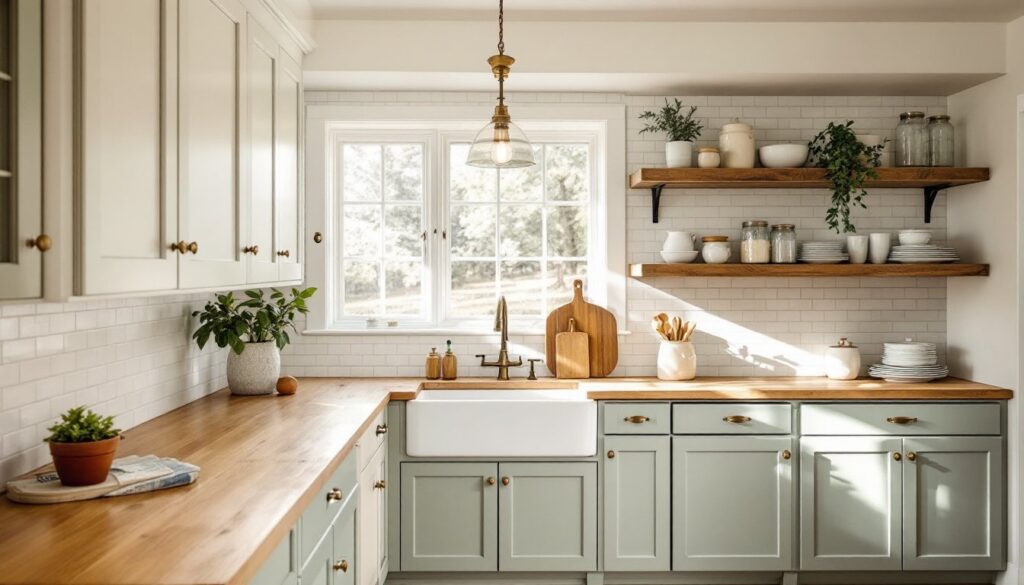
Sage also pairs naturally with farmhouse staples: butcher block counters, open shelving, apron-front sinks, and shiplap walls. It doesn’t compete with those elements: it complements them. The result is a cohesive look that feels intentional, not like a Pinterest board thrown together.
Best Sage Green Paint Colors for Kitchen Cabinets
Not all sage greens are created equal. Some lean warmer with olive undertones, others pull cooler with more gray. Testing samples in your actual kitchen light is non-negotiable, what looks perfect on a paint chip can read completely different under your LED fixtures or south-facing windows.
Sherwin-Williams Clary Sage (SW 6178) is a reliable mid-tone option with balanced gray-green undertones. It’s soft enough for upper cabinets but has enough presence to anchor lowers without feeling washed out. Coverage is typically 350–400 square feet per gallon with two coats on previously painted cabinets.
Benjamin Moore Saybrook Sage (HC-114) skews slightly grayer and works particularly well in kitchens with cooler light or stainless steel appliances. It’s part of their Historical Color collection, which means the formula is designed to resist fading and maintain color integrity over time.
Farrow & Ball Vert de Terre (No. 234) offers a more complex, layered look with subtle brown undertones. It’s pricier, expect around $110 per gallon, but the depth of color is hard to replicate with standard paints. This one shines in kitchens with natural wood accents or soapstone counters.
For DIYers using cabinet-specific paints like Benjamin Moore Advance or Sherwin-Williams Emerald Urethane, plan on two coats minimum after proper priming. These formulas self-level well and cure to a durable, scrubbable finish, critical for cabinet surfaces that take daily abuse. Some homeowners exploring green kitchen cabinet ideas appreciate how sage tones adapt to various design styles, from vintage to contemporary farmhouse.
Choosing the Right Hardware and Fixtures
Hardware can make or break sage green cabinets. The wrong finish will flatten the color: the right one will make it sing.
Aged brass and antique brass are top picks for farmhouse aesthetics. The warm, slightly tarnished look adds depth and pairs beautifully with sage’s earthy undertones. Look for unlacquered brass if you want natural patina over time, or sealed finishes for consistent color. Cup pulls and bin pulls work especially well on drawers, while knobs suit upper cabinets.
Matte black hardware offers sharp contrast and works if your kitchen leans more modern farmhouse. It’s bold without being flashy and pairs well with black window frames or matte black faucets. Just keep proportions in mind, oversized pulls can overwhelm sage cabinets, especially on narrow door panels.
Brushed nickel and satin nickel provide a cooler, more understated option. They’re practical (fingerprints don’t show as much) and pair well if you’re using stainless appliances or cool-toned backsplashes.
For faucets and sinks, apron-front farmhouse sinks in white fireclay are the classic pairing. Bridge faucets in aged brass or oil-rubbed bronze tie in the hardware and add a vintage touch. If going with a stainless undermount sink, stick with brushed or satin finishes rather than high-polish chrome, which can feel too contemporary.
Installation tip: When replacing hardware, measure your existing hole spacing (center-to-center distance) before buying. Standard pulls are 3 inches or 96mm, but if your old hardware used different spacing, you’ll either need to drill new holes or find pulls that match. Drilling new holes in painted cabinets is doable but requires touch-up work.
Countertop and Backsplash Pairings That Complement Sage Green
Sage green cabinets are forgiving, but countertop and backsplash choices still matter. The goal is balance, enough contrast to define the space without creating visual competition.
Butcher block countertops are a natural fit. The warm honey tones in maple or birch, or the richer hues in walnut, bring out sage’s earthy side. Butcher block does require maintenance, regular oiling with food-safe mineral oil and prompt cleanup of water and acids, but the warmth it adds is hard to beat. Expect to pay $40–$80 per square foot installed, depending on wood species and thickness.
White quartz or marble keeps things bright and clean. Quartz offers durability and low maintenance (no sealing required), while marble brings character through natural veining. If going marble, choose a variety with subtle gray veining rather than heavy contrast, Carrara or Calacatta work well. Budget $60–$100 per square foot for quartz, $75–$150+ for marble, both installed.
Soapstone offers a moodier, more layered look. Its dark gray surface with natural veining deepens over time as you oil it, creating a living finish that suits sage’s organic feel. It’s softer than granite (scratches more easily) but also self-healing, minor scratches disappear with light sanding and oiling.
For backsplashes, white subway tile remains a foolproof choice. Classic 3×6-inch tiles in a brick or herringbone pattern add texture without competing. Handmade or slightly irregular tiles prevent the look from feeling too sterile. Pair with light gray grout (not bright white, which can look stark against sage).
Alternatively, a natural stone backsplash in stacked ledgestone or tumbled travertine brings farmhouse texture. Keep the stones in neutral tones, cream, gray, or soft taupe, to avoid overwhelming the cabinets. Many kitchen design resources emphasize the importance of balancing color and texture when working with painted cabinetry.
DIY Tips for Painting Your Cabinets Sage Green
Painting cabinets isn’t complicated, but it’s detail-heavy. Skipping prep or rushing between coats will show.
Prep work accounts for 60% of the job. Remove all doors, drawers, and hardware. Label everything with painter’s tape and a marker, numbering doors and their corresponding frames saves major headaches during reinstallation. Clean all surfaces with a degreaser like TSP (trisodium phosphate) or a TSP substitute to remove cooking oils and grime. Lightly sand everything with 150-grit sandpaper to scuff the existing finish and promote adhesion. Wipe down with a tack cloth.
Priming is mandatory, even if you’re painting over existing paint. Use a high-adhesion primer like Zinsser B-I-N Shellac-Base or Kilz Adhesion. These lock down old finishes and prevent tannin bleed-through on wood. Apply with a foam roller for flat surfaces and a quality angled brush (Purdy or Wooster) for edges and details. Let primer dry fully, usually 2–4 hours.
Paint application: Use cabinet-specific paint, not wall paint. Benjamin Moore Advance (waterborne alkyd) and Sherwin-Williams Emerald Urethane Trim Enamel both cure to a hard, durable finish. Apply thin coats with a foam roller, rolling in the direction of the wood grain. Backbrush edges and corners with your angled brush to eliminate bubbles. Two coats minimum: three if you’re going from a dark color to sage.
Drying time matters. Allow 16 hours between coats and at least 7 days of cure time before reinstalling doors and replacing hardware. The paint may feel dry to the touch, but full cure takes time, rushing this step leads to scratches and imprints.
Safety: Wear goggles and a respirator (not just a dust mask) when sanding and spraying. Work in a well-ventilated space, ideally with a fan pulling fumes outside. For homes built before 1978, assume lead paint is present and take appropriate precautions or hire a certified lead-safe contractor.
Tool alternatives: A paint sprayer (HVLP or airless) gives the smoothest finish but requires practice and thorough masking. A foam roller is the DIY-friendly middle ground, and a quality brush works for small jobs or touch-ups. Regional home design traditions often influence paint choices and application techniques, especially in farmhouse-style renovations.
Styling Your Farmhouse Kitchen with Sage Green Cabinets
Once the cabinets are in, styling brings the room together.
Open shelving works beautifully with sage. Swap a few upper cabinets for floating shelves in reclaimed wood or simple brackets with thick pine boards. Display everyday items, white ironstone dishes, wooden cutting boards, glass canisters, rather than decorative clutter. Keep it functional.
Lighting sets the mood. Pendant lights in aged brass, matte black, or even clear glass with Edison bulbs hang well over islands or sinks. For general lighting, semi-flush mount fixtures in simple shapes (dome, schoolhouse, or cage styles) suit the farmhouse vibe without feeling too ornate.
Textiles add warmth. Linen or cotton curtains in natural tones (cream, oatmeal, soft gray) soften windows without blocking light. A vintage-style runner or small area rug near the sink adds underfoot comfort, look for durable materials like cotton or low-pile jute that can handle spills.
Countertop styling: Keep it minimal. A wooden tray corralling olive oil, salt, and pepper: a small potted herb like basil or rosemary: a ceramic utensil crock. Avoid overcrowding, farmhouse style breathes.
Wall color matters too. Warm whites like Benjamin Moore Swiss Coffee or Sherwin-Williams Alabaster let sage cabinets stand out without harsh contrast. Light greige tones work if you want a cozier feel, but avoid anything too beige or yellow, which can muddy the green.
Finally, don’t overthink it. Sage green is forgiving. It suits everything from vintage brass scales to modern bar stools. The key is balance, layer in natural materials, stick to a restrained color palette, and let the cabinets be the anchor.
Conclusion
Sage green cabinets deliver timeless farmhouse charm without locking you into a passing trend. Whether you’re painting existing cabinets or ordering custom builds, the color’s versatility and warmth make it a smart, durable choice. Pair it thoughtfully with hardware, countertops, and finishes, and you’ll have a kitchen that feels both current and lasting.