Flat roofs are common across New Jersey, on row houses, garage additions, and low-slope commercial buildings converted to residential use. They’re practical, cost-effective, and easier to access than pitched roofs. But they also take a beating from the state’s freeze-thaw cycles, heavy summer rains, and nor’easters. When a leak starts, it’s rarely dramatic. You’ll notice a stain on the ceiling, a damp spot in the attic, or pooling water after a storm. Catching damage early and knowing whether to patch it yourself or call in a pro can save hundreds, or prevent thousands in structural damage.
Table of Contents
ToggleKey Takeaways
- New Jersey’s freeze-thaw cycles, heavy rains, and nor’easters create common flat roof problems including ponding water, membrane cracking, blister formation, and flashing failures that require early detection to prevent costly structural damage.
- DIY flat roof repair in New Jersey works for isolated leaks under 10 square feet with accessible, solid roof decks, but requires calling a licensed contractor for widespread damage, structural issues, or work exceeding $500.
- Matching repair materials to your specific membrane type—EPDM, TPO, modified bitumen, or built-up roofing—is critical; using incompatible sealants or patches can worsen damage.
- Professional flat roof repair costs range from $200–$500 for minor patches to $3,500–$7,500 for full replacement on a 500 sq ft roof, with northern New Jersey labor running 10–15% higher than the state average.
- If repair costs approach 25–30% of replacement cost, replacing the roof is more economical than serial patching, especially since most New Jersey flat roofs need replacement every 15–20 years.
- Proper slope, flashing maintenance, and regular inspections every 3–5 years help extend the life of flat roofs in New Jersey’s harsh climate and prevent water pooling.
Common Flat Roof Problems in New Jersey Homes
New Jersey’s climate is tough on flat roofs. Winter freeze-thaw cycles expand and contract roofing membranes, cracking seams and splitting older materials like built-up roofing (BUR) or modified bitumen. Summer heat softens asphalt-based products, making them vulnerable to punctures from foot traffic or debris.
Ponding water is the most frequent issue. Flat roofs aren’t truly flat, they should have a slope of at least 1/4 inch per foot for drainage. Over time, settling, sagging joists, or poor initial construction create low spots where water pools. Standing water for more than 48 hours after rain accelerates membrane degradation and invites algae growth.
Blistering and cracking show up on older roofs, especially BUR and rolled roofing. Blisters form when moisture gets trapped under the top layer and expands in the heat. If left alone, they crack open and let water in.
Flashing failures around parapet walls, HVAC units, and roof penetrations cause the majority of leaks. Flashing relies on sealant and proper overlap, both degrade faster in New Jersey’s humidity and temperature swings. Rusted metal flashing or separated seams are dead giveaways.
Membrane shrinkage affects EPDM (rubber) and TPO roofs. As the material ages, it contracts, pulling away from edges and fasteners. You’ll see exposed fastener heads or gaps at the perimeter.
Knowing what you’re dealing with helps decide whether a tube of roof sealant will hold or if the membrane needs replacing.
When to DIY vs. When to Call a Professional
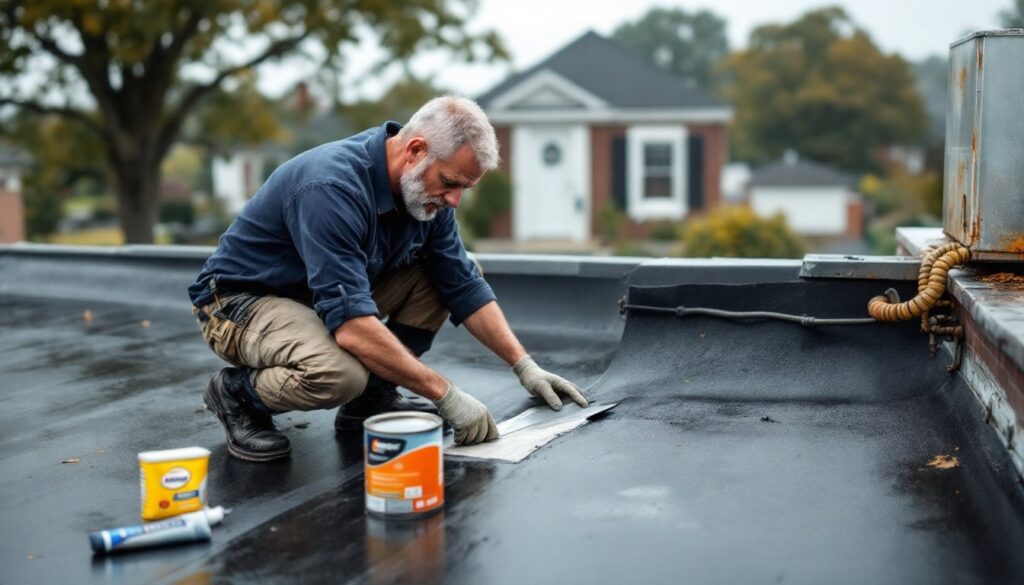
Not every flat roof problem is a weekend project. Small, localized repairs, patching a blister, sealing a crack, or re-bedding loose flashing, are well within reach for a confident DIYer. If the damage is under 10 square feet, the roof deck is solid, and the membrane is still in decent shape overall, you can handle it.
You should DIY if:
- The leak is isolated and you can pinpoint the source (a cracked seam, puncture, or open blister).
- The roof surface is accessible and safe to work on (low-slope, no more than one story high, with secure footing).
- The membrane type is straightforward, EPDM, TPO, or modified bitumen respond well to peel-and-stick patches and compatible sealants.
- You’re comfortable working on a ladder and have basic hand tools.
Call a licensed roofer if:
- Ponding water covers large areas or the roof sags visibly, this suggests structural issues that need a building inspection and possibly joist reinforcement.
- The leak is near flashing, chimneys, or complex penetrations. Proper flashing requires metal fabrication, torch application, or heat welding, depending on the membrane.
- You see widespread cracking, multiple blisters, or the top layer is peeling away in sheets. The roof is likely near the end of its service life (15–25 years for most flat roofs), and a full replacement is more cost-effective than serial patching.
- The damage involves the roof deck. Soft, spongy areas or visible rot mean the plywood or OSB sheathing is compromised. This is structural work that needs a permit in most NJ municipalities.
- You’re dealing with a built-up roof (BUR) or spray polyurethane foam (SPF) system. These require specialized equipment and training.
In New Jersey, roofing work generally requires a home improvement contractor license if the job exceeds $500. For your own peace of mind and insurance purposes, get a written estimate and confirm the contractor is licensed and insured. Many homeowners use platforms like HomeAdvisor to compare local roofers and read verified reviews before hiring.
Essential Materials and Tools for Flat Roof Repairs
Using the right materials matters. Flat roof membranes aren’t interchangeable, and using the wrong sealant or patch can make things worse.
Materials:
- Roof patch kit (EPDM, TPO, or modified bitumen, matched to your existing membrane). Peel-and-stick patches are easiest for small repairs.
- Roof cement or mastic (asphalt-based for BUR or modified bitumen: EPDM-compatible adhesive for rubber roofs).
- Primer (if recommended by the patch manufacturer, some membranes need surface prep for adhesion).
- Roof sealant (polyurethane or silicone for seams and flashing: avoid using generic caulk).
- Fiberglass mesh tape (for reinforcing larger patches on asphalt-based roofs).
- Replacement flashing (galvanized steel or aluminum, pre-bent if available).
- Roofing nails or screws (if re-securing loose membrane edges).
- Mineral spirits or membrane cleaner (to remove dirt, oils, and old sealant before patching).
Tools:
- Utility knife with hook blades (for cutting membrane cleanly)
- Putty knife or trowel (for spreading cement)
- Stiff-bristle brush (for applying primer)
- Caulk gun (for sealant tubes)
- Garden hose (to test repairs after curing)
- Chalk or spray paint (to mark damaged areas)
- Extension ladder rated for your weight plus materials
- Safety harness and anchor point (if the roof is more than 10 feet high or steep)
Safety gear:
- Slip-resistant boots (wet membrane is slick)
- Work gloves (roof cement is sticky and tough to clean off skin)
- Safety glasses (especially when cutting or scraping)
- Knee pads (you’ll be kneeling a lot)
Buy materials from a roofing supply house, not a big-box store, if possible. They stock professional-grade products and can confirm compatibility with your membrane type.
Step-by-Step Flat Roof Repair Process
Locating and Assessing the Damage
Flat roof leaks are sneaky. Water can enter at one spot and travel along the roof deck before dripping into your living space. Start inside: note where the stain or drip is, then head to the attic (if accessible) and look for wet insulation, dark streaks, or mold. Trace the moisture upward to the roof deck.
Once on the roof, inspect the area directly above the interior damage. Look for:
- Cracks, splits, or punctures in the membrane
- Blisters (raised bubbles in the surface)
- Open seams or lifted edges
- Missing or cracked flashing
- Ponding water (indicates a low spot)
Mark damaged areas with chalk. If you find ponding, check the slope with a 4-foot level. The roof should drop at least 1 inch over 4 feet. If it’s dead flat or has reverse slopes, you’re looking at a drainage problem that might need tapered insulation or structural correction, beyond the scope of a simple patch.
For blisters, press down gently. If it’s soft or you feel water squish, it’s active. Cut an X through the blister with a utility knife, peel back the flaps, and let it dry completely (24–48 hours in dry weather). If the roof deck underneath is wet or spongy, you’ll need to replace that section of decking, call a pro.
Applying Patches and Sealants
Once the damaged area is dry, clean it thoroughly. Sweep off debris, then wipe the surface with mineral spirits (for asphalt-based roofs) or a membrane-specific cleaner (for EPDM or TPO). Dirt and oils kill adhesion.
If you’re repairing a blister or small crack, follow this sequence:
- Apply primer if the patch requires it (check the manufacturer’s instructions). Let it dry to the touch, usually 15–30 minutes.
- Cut the patch at least 2 inches larger than the damaged area on all sides. Round the corners, sharp corners lift more easily.
- Peel and stick the patch, pressing from the center outward to avoid trapping air bubbles. Use a J-roller (a small hand roller) or press firmly with a block of wood.
- Seal the edges with a thin bead of compatible roof sealant. Feather it out with a putty knife so water can’t get under the patch.
For seam repairs (common on EPDM roofs), lift the loose flap, clean both surfaces, apply adhesive per the product specs, press together, and weight it down with sandbags or concrete blocks for at least an hour.
For flashing repairs, remove old sealant and rust with a wire brush. If the metal is intact, apply a thick bead of polyurethane sealant and press the flashing back in place. If it’s rusted through, cut a new piece to match, overlap the old flashing by at least 3 inches, and fasten with roofing screws and washers. Seal all edges and fastener heads.
After the patch has cured (check the product label, usually 24 hours), test it. Run a hose over the repair for 10 minutes and check inside for leaks. If it’s still dripping, the damage is elsewhere or the patch didn’t seal. Don’t assume the first spot you find is the only one.
Larger repairs, anything over a few square feet, often benefit from fiberglass mesh reinforcement. Embed the mesh in a layer of roof cement, then apply a second coat over the top. This distributes stress and prevents the patch from cracking at the edges. Homeowners researching contractor pricing for comparable work report that professional patching typically runs $200–$500 for small repairs, depending on access and materials.
Cost Expectations for Flat Roof Repairs in New Jersey
Costs vary widely based on roof size, damage extent, and membrane type. Here’s a rough breakdown for 2026 in New Jersey:
DIY repairs:
- Peel-and-stick patch kit (3’×6′ EPDM): $30–$60
- Roof cement (1-gallon): $20–$35
- Sealant tube: $8–$15
- Primer: $15–$25
- Total for a small patch: $75–$150 in materials, plus your time.
Professional repairs:
- Minor patch (under 10 sq ft): $200–$500
- Flashing replacement (one area): $300–$700
- Seam repair (10–20 linear feet): $400–$800
- Ponding water correction (tapered insulation, small section): $1,200–$2,500
- Full flat roof replacement (500 sq ft, EPDM or TPO): $3,500–$7,500
Labor in northern New Jersey (Bergen, Hudson, Essex counties) runs 10–15% higher than the state average. Shore and rural areas are closer to the lower end.
Material costs have climbed since 2024 due to supply chain shifts and increased demand for TPO and PVC membranes. EPDM remains the most cost-effective, but TPO is gaining ground for energy efficiency (white reflective surface).
Keep in mind that New Jersey’s climate shortens roof lifespan compared to drier states. Budget for re-coating or patching every 3–5 years and full replacement every 15–20 years for most membranes. Many homeowners use cost estimation tools to budget for multi-year maintenance plans and compare contractor bids.
If your repair bill approaches 25–30% of a full replacement cost, seriously consider replacing the roof instead. Serial patching on a failing membrane is throwing money away.