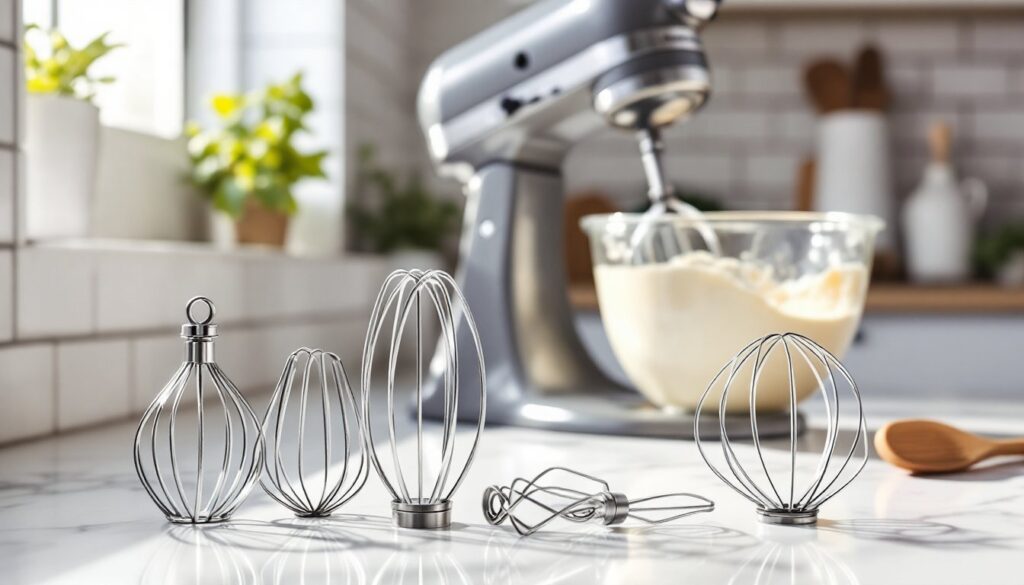
A KitchenAid hand mixer is only as good as the attachments spinning at the end of it. Whether you’re whipping cream, kneading pizza dough, or mixing cookie batter, the right beater makes the difference between a smooth, professional result and a lumpy mess. Most home bakers stick with the standard beaters that come in the box, but KitchenAid offers a range of specialized attachments designed for specific tasks. Understanding what’s included, what’s optional, and how to use each tool properly will save time, improve results, and extend the life of your mixer.
Table of Contents
ToggleKey Takeaways
- KitchenAid hand mixer attachments come standard with flat beaters and may include wire whips on higher-end models, with compatibility varying by model year and requiring verification before purchasing replacements.
- Wire whips excel at incorporating air for whipped cream and meringues, while flat beaters work best for dense batters like cookie dough and frosting—using the right KitchenAid hand mixer attachment delivers superior results.
- Dough hooks are essential optional attachments for kneading bread and pizza dough, requiring speeds 2–5 and roughly 4–6 minutes per batch, but hand mixers lack the torque for extreme dough consistencies.
- Proper attachment care—including immediate removal, hand-washing when possible, and storage in the included case—extends the lifespan of your KitchenAid hand mixer accessories and prevents uneven mixing.
- Always unplug your mixer before attaching or removing accessories, using gentle pressure on the twist-lock or button-release mechanism to avoid damaging the locking tabs.
- Purchase KitchenAid hand mixer replacement beaters and accessories from the official KitchenAid website for guaranteed compatibility, or verify model numbers and material quality when buying from retailers or online marketplaces.
What Attachments Come Standard with KitchenAid Hand Mixers?
Most KitchenAid hand mixer models ship with two essential attachments: flat beaters (also called turbo beaters) and a storage case. The flat beaters feature a twisted wire design with a flat edge on one side, engineered to scrape the sides of the bowl as they rotate. These are the workhorses of everyday baking, use them for cookie dough, cake batter, mashed potatoes, and frostings.
Some higher-end models, like the KitchenAid 9-Speed Digital Hand Mixer, include a third attachment: wire whips. These are lighter, with more wire loops, and they incorporate air faster than flat beaters. If your model didn’t come with wire whips, they’re worth buying separately.
The KitchenAid hand mixer beaters are dishwasher-safe stainless steel, though hand-washing extends their lifespan. Check your manual or model number to confirm what shipped with your unit, some budget models include only one pair of flat beaters.
One note: KitchenAid hand mixer beaters are not universally interchangeable across all models. The shaft diameter and locking mechanism vary slightly between older and newer mixers. If you’re ordering KitchenAid hand mixer replacement beaters, verify compatibility with your model number (usually stamped on the bottom of the mixer housing).
Essential Optional Attachments Every Home Baker Should Know
Dough Hooks: When and How to Use Them
Dough hooks are the optional attachment most home bakers underuse. They’re designed for kneading bread dough, pizza dough, and other yeast-based recipes that require gluten development. The hook shape mimics the motion of hand-kneading, pulling and folding the dough as it rotates.
Use dough hooks for recipes with a hydration ratio (water-to-flour by weight) between 55% and 65%. That covers most sandwich breads, dinner rolls, and classic pizza doughs. For very wet doughs (ciabatta, focaccia) or very stiff bagel doughs, a stand mixer or hand-kneading works better, hand mixers lack the torque for extremes.
Start on speed 2 for 30 seconds to combine ingredients, then increase to speed 4 or 5 for 4–6 minutes. The dough should pull cleanly away from the bowl sides and feel smooth and elastic. If the mixer motor strains or smells hot, stop immediately, overloading a hand mixer can burn out the motor.
Dough hooks sold as KitchenAid hand mixer accessories typically come in pairs and fit models manufactured after 2010. Older models may require a different hook design.
Wire Whips vs. Beaters: Choosing the Right Tool
The difference between wire whips and flat beaters comes down to air incorporation and density. Wire whips have more surface area and lighter gauge wire, which means they move through liquid batters faster and trap more air with each pass. Flat beaters have fewer, thicker wires and a scraping edge, making them better for dense mixtures.
Use wire whips for:
- Whipped cream (heavy cream whips in 2–3 minutes on speed 8)
- Meringues and egg whites (stiff peaks form in 5–7 minutes)
- Light batters like angel food cake or soufflés
- Salad dressings and vinaigrettes
Use flat beaters for:
- Cookie dough, brownie batter, and quick breads
- Buttercream frosting and cream cheese mixtures
- Mashed potatoes and other root vegetables
- Anything with add-ins (chocolate chips, nuts, dried fruit)
Wire whips are more fragile than flat beaters. Don’t use them for thick batters, they’ll bend. If a recipe calls for folding in ingredients after whipping, switch to a spatula. Over-mixing with a whip deflates the air you just incorporated.
How to Properly Attach and Remove KitchenAid Hand Mixer Accessories
KitchenAid hand mixers use a twist-lock mechanism or a button-release system, depending on the model. Both designs are tool-free, but forcing attachments in or out is the fastest way to strip the locking tabs.
To attach beaters or accessories:
- Unplug the mixer. Never attach or remove accessories with the cord plugged in.
- Identify the attachments. Most KitchenAid beaters have a collar or ring near the top. One beater has a larger collar (goes in the right-side slot), the other has a smaller collar (left-side slot). Some models mark the slots with a gear icon or raised dot.
- Align the beater shaft with the slot. Push straight up until you hear or feel a click.
- Twist the beater clockwise about 1/4 turn (if your model requires it). Some newer models lock on insertion without twisting.
- Tug gently to confirm the attachment is seated. It shouldn’t pull free.
To remove attachments:
- Unplug the mixer.
- Hold the attachment near the base (not by the wire loops).
- Press the eject button (if your model has one) or twist counterclockwise and pull straight down.
- If an attachment is stuck, tap the mixer body gently on the counter (over a towel) to dislodge it. Don’t yank, plastic locking tabs crack easily.
Always remove attachments before washing. Dried batter in the locking mechanism causes wear and makes future removal difficult.
Cleaning and Maintaining Your Hand Mixer Attachments
Proper cleaning extends the life of KitchenAid hand mixer beaters and prevents cross-contamination between recipes. Stainless steel attachments are dishwasher-safe, but hand-washing is gentler and faster.
Immediate cleaning (best practice):
- Remove attachments while still slightly warm. Dried batter is harder to remove.
- Rinse under hot water to remove loose batter.
- Wash with dish soap and a sponge or bottle brush. Pay attention to the collar area where batter collects.
- Rinse thoroughly. Soap residue affects the flavor of whipped cream and meringues.
- Dry immediately with a towel. Air-drying can leave water spots.
Dishwasher cleaning:
Place attachments in the top rack only. The bottom rack gets too hot and can discolor stainless steel over time. Use a standard wash cycle, heated dry is fine.
Stubborn residue:
For dried dough or batter stuck in wire loops, soak attachments in warm water with a tablespoon of baking soda for 15 minutes. Use a toothbrush or small bottle brush to work residue free. Avoid abrasive scrubbers, they scratch stainless steel and create pits where bacteria can hide.
Storage:
Store attachments in the case that came with your mixer, or hang them on hooks. Don’t toss them loose in a drawer, wire whips bend easily. If a beater develops a bent wire, replace it. Misshapen attachments cause uneven mixing and can damage the bowl.
Where to Buy Replacement and Additional Attachments
KitchenAid hand mixer replacement beaters and optional accessories are available through several channels, but not all sources guarantee authentic parts.
KitchenAid’s official website sells replacement beaters, dough hooks, and wire whips. Prices run $12–$25 per pair depending on the attachment type. Shipping is flat-rate, and compatibility filters by model number. This is the safest option for ensuring you get parts that fit.
Amazon stocks both OEM (original equipment manufacturer) and third-party attachments. OEM parts are labeled “KitchenAid” and match the quality of what shipped with your mixer. Third-party options are cheaper ($8–$15) but may not fit as snugly or last as long. Read reviews carefully, some aftermarket beaters have thinner wire that bends under load.
Big-box retailers like Target, Walmart, and Bed Bath & Beyond carry a limited selection in-store, usually just standard flat beaters. Selection is better online, but return policies vary if attachments don’t fit your model.
Specialty kitchen stores such as Williams Sonoma and Sur La Table stock KitchenAid accessories and often have knowledgeable staff who can confirm compatibility. Prices are typically higher than online, but you can inspect parts before buying.
What to verify before purchasing:
- Model compatibility. Check your mixer’s model number (stamped on the bottom). Attachments for 5-speed mixers may not fit 7-speed or 9-speed models.
- Attachment type. Confirm whether you need flat beaters, wire whips, or dough hooks. Specialized guides can help identify which attachment suits your baking needs.
- Material. Stainless steel is standard. Avoid coated or plastic attachments, they’re not as durable.
- Return policy. If ordering online, confirm you can return attachments if they don’t fit.
Replacement beaters typically ship within 3–5 business days. If you need attachments immediately and your local stores don’t stock them, check restaurant supply stores, they sometimes carry commercial-grade KitchenAid parts.