A table saw is the heart of any serious workshop. Whether you’re ripping sheet goods, making precise crosscuts, or cutting complex joinery, the right saw determines whether your project ends with tight-fitting joints or frustrating gaps. Laguna Tools has built a reputation for bridging the gap between industrial-grade machinery and home workshop budgets. Their table saws deliver precision, durability, and features that traditionally cost thousands more. For hobbyists looking to step up from big-box contractor saws, or experienced woodworkers who want European engineering without the overseas price tag, Laguna deserves serious consideration.
Table of Contents
ToggleKey Takeaways
- Laguna table saws deliver precision at an affordable price point ($1,200–$3,500) by using cast-iron construction and tool-free adjustable riving knives that prevent costly mistakes and improve safety.
- The Laguna Fusion series offers the best balance for home workshops, featuring a 36-inch rip capacity, enclosed dust collection, and a mobile base that lets you reclaim shop space between projects.
- Proper setup and maintenance—including blade-to-slot alignment, fence squareness checks, and regular wax coating—are essential to unlock the full precision potential of your Laguna table saw.
- Laguna’s 4-inch dust collection ports with internal baffling capture up to 90% of chips at the source, protecting both your respiratory health and keeping your workspace cleaner than standard contractor saws.
- A Laguna table saw is a worthwhile investment for serious hobbyists building furniture or cabinetry, as it holds 60–70% resale value and eliminates the frustration of fighting cheaper tools that won’t hold tolerances.
What Makes Laguna Table Saws Stand Out?
Laguna Tools got its start importing Italian machinery before designing their own equipment specifically for North American woodworkers. That heritage shows in their attention to detail and heavy-gauge steel construction.
Most cabinet saws in the $2,000–$4,000 range use stamped steel tables that can warp over time. Laguna mills their tabletops from solid cast iron, often with precision-ground surfaces that measure flat within 0.003 inches across the entire surface. That matters when you’re trying to hold tolerances for drawer fronts or face frames.
Their riving knives are tool-free adjustable and move with the blade, critical for preventing kickback. Many older saws use fixed splitters that require removal for non-through cuts, which is both inconvenient and dangerous. Laguna also equips most models with rip fences that lock square without micro-adjustments. The fence rails are often longer than standard, supporting rips up to 50 inches on some models.
Another standout: dust collection. Laguna designs their blade enclosures with 4-inch ports and internal baffling that actually captures sawdust instead of spraying it across your shop. Connect a 1.5 HP dust collector or better, and you’ll pull 90% of chips at the source, important for both shop cleanliness and respiratory health. According to This Old House, effective dust management is one of the most overlooked safety features in a home workshop.
Motor sizing is generous, too. Their entry-level saws start with 1.75 HP motors that don’t bog down in hardwood. Higher-end models use 3 HP or 5 HP three-phase motors with onboard phase converters, giving you industrial cutting capacity on standard 220V home circuits.
Popular Laguna Table Saw Models for DIYers and Hobbyists
Laguna’s lineup includes everything from compact benchtop units to industrial-grade machines. For most home workshops, three models dominate.
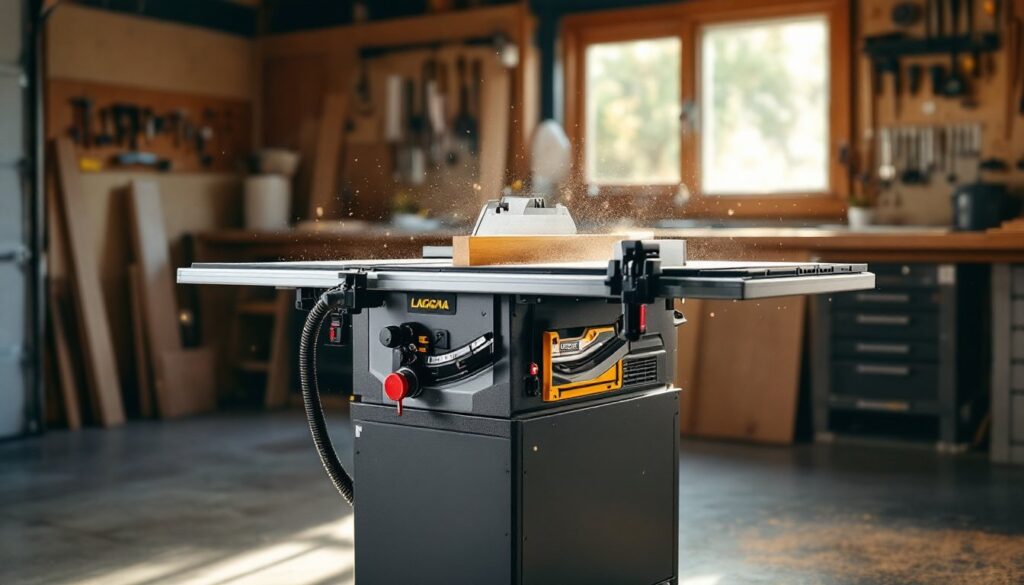
The Laguna Fusion series hits the sweet spot for serious hobbyists. It’s a hybrid design: cabinet-style construction with an enclosed base for dust collection, but lighter weight than a true cabinet saw. The Laguna Fusion table saw typically ships with a 1.75 HP motor, a 36-inch rip capacity, and a granite polymer table extension that stays flat and dampens vibration better than stamped wings. Pricing runs around $1,800–$2,200 depending on configuration.
For smaller shops, the LT14 bandsaw often pairs with the compact Laguna F1 table saw (sometimes marketed as the Fusion F1). It’s a contractor-style saw with a lighter footprint but retains the precision fence and cast-iron table. Rip capacity maxes at 30 inches, which handles most plywood and dimensional lumber. Expect to pay $1,200–$1,500.
At the top end, the Laguna TSS (Table Saw Series) delivers cabinet-saw performance. These use 3–5 HP motors, full-length T-square fences with micro-adjust, and enclosed cabinets with integrated mobile bases. They’re aimed at professional shops but show up in dedicated home workshops where space and budget allow. Pricing starts around $3,500.
Fusion Series: Best for Home Workshops
The Laguna Fusion table saw deserves special attention because it’s purpose-built for the home woodworker who’s outgrown a job-site saw but doesn’t have room (or three-phase power) for a 600-pound cabinet saw.
Key specs include a 10-inch blade with a 13-inch resaw capacity under the upper guide (wait, that’s bandsaw talk, ignore that). For the table saw, you’re looking at a 3-1/8 inch depth of cut at 90 degrees, which handles any solid lumber or laminated material you’ll run into. The fence locks with a single cam lever and stays parallel within 0.001 inches over the full rip range, tight enough for veneered work.
The base encloses the motor and trunnions completely, with a dust port that matches standard 4-inch hose. Pair it with a shop vac rated at 6.5 HP peak or a dedicated collector, and cleanup time drops significantly. As noted by Popular Mechanics, modern hybrid saws with proper dust collection rival cabinet saws in performance while fitting tighter spaces.
Mobility is another plus. Most Fusion models ship with (or offer) a quick-release mobile base that lets one person roll a 300-pound saw out from the wall, lock it down for cutting, then tuck it back. If you share garage space with cars or yard equipment, that’s not a luxury, it’s essential.
One gotcha: the miter gauge that ships with Laguna saws is adequate but not precision-grade. Budget another $80–$150 for an aftermarket Incra V27 or similar if you’re doing repeated crosscuts or miters.
Key Features to Consider Before Buying
Before dropping $1,500+ on any table saw, nail down these decision points.
Rip capacity determines the widest board you can cut. A 30-inch capacity handles a full sheet of plywood ripped in half (48 ÷ 2 = 24 inches, with wiggle room). If you regularly work with sheet goods, look for 36 inches or more. Laguna’s T-square fences extend without aftermarket rails, which saves money and setup headaches.
Motor power and electrical requirements go hand in hand. A 1.75 HP, 120V motor will run on a standard 15-amp circuit but may struggle in thick hardwoods or with stacked dado sets. Step up to 220V and you unlock 3–5 HP options that slice through 8/4 maple without bogging down. Most homes built after 1990 have a 220V dryer outlet in the garage or basement, an electrician can add a dedicated 30-amp circuit for $200–$400, depending on distance from the panel. Check local codes: this work typically requires a permit.
Dust collection isn’t optional if you value your lungs. Look for saws with 4-inch ports and enclosed blade housings. A good dust collection system captures chips before they become airborne. Wear a respirator rated N95 or better even with collection running, fine dust from MDF, plywood adhesives, and exotic hardwoods poses long-term health risks.
Fence precision and adjustability matter more than motor specs for joinery. The fence should lock parallel to the blade without deflection. Laguna’s fences use steel tubes and cam locks rather than stamped channels, which reduces flex. Test by measuring front and rear distance from the fence to the miter slot at full extension: anything over 0.010-inch difference means the fence can cause binding or kickback.
Safety features separate modern saws from vintage iron. At minimum, look for a riving knife that adjusts with blade height, a blade guard with easy on/off, and an anti-kickback pawl. Laguna includes these as standard. Some woodworkers add aftermarket SawStop-style brake cartridges, but Laguna doesn’t currently offer flesh-detection technology, if that’s non-negotiable, you’ll need to shop elsewhere.
Mobility isn’t glamorous, but it’s practical. A stationary 400-pound saw eats floor space permanently. A good mobile base (retractable casters, foot-pedal lock) lets you reclaim that space between projects. Laguna sells matched bases for most models, or universal bases from Rockler or Woodcraft fit with minor drilling.
Setting Up Your Laguna Table Saw: Step-by-Step Guide
Unboxing and tuning a cabinet saw isn’t a 20-minute job. Set aside half a day and gather these tools: a 6-inch machinist’s square, feeler gauges, a dial indicator with magnetic base, and a good straightedge (24 inches or longer). You’ll also need basic wrenches, hex keys (usually included), and shims (playing cards or aluminum stock work fine).
-
Uncrate and inspect for shipping damage. Check the table for cracks, the fence for bends, and the miter slots for debris. Laguna ships with cosmoline or waxy protective coating, remove it with mineral spirits and shop rags before assembly.
-
Level the saw. Use a 4-foot level across the table in multiple orientations. Adjust the mobile base or shim the feet until the table reads level within one bubble width. An unlevel saw will cause the workpiece to drift during rip cuts.
-
Align the blade to the miter slots. Raise the blade to full height. Mark one tooth with a Sharpie, rotate it forward, and measure the distance from that tooth to the miter slot at the front and rear of the blade. Use a dial indicator or precision square. The measurements should match within 0.002 inches. If they don’t, loosen the trunnion bolts under the table and tap the assembly until it’s parallel, then retighten. This step is critical, skip it and you’ll get burn marks, binding, and dangerous kickback.
-
Square the fence to the blade. Lock the fence at any position, then use a machinist’s square against the blade body (not the teeth) and the fence face. Adjust the fence’s rear micro-adjust or the mounting bolts until it’s 90 degrees. Check again at full extension to confirm it stays parallel.
-
Install and align the riving knife and blade guard. The riving knife should sit 3–5 mm behind the blade and align with its centerline. Laguna’s tool-free adjustment makes this straightforward, but double-check with a straightedge across the blade.
-
Set blade height and bevel stops. Run the blade to 90 degrees and verify with a square against the table. Adjust the positive stop if needed. Repeat at 45 degrees. Most Laguna saws have micro-adjustable stops, get these dialed in now, and you won’t chase angles later.
-
Test cut and tune. Rip a scrap board, check for burn marks or drift. If the blade leaves burn marks even though sharp teeth, re-check blade-to-slot alignment. If the board drifts, verify the fence is parallel.
This process sounds tedious, but an afternoon of setup saves months of frustration. Factory assembly is close, not perfect, taking time to tune the saw pays off in cleaner cuts and safer operation.
Maintenance Tips to Keep Your Saw Running Smoothly
A well-maintained table saw lasts decades. Neglect it, and you’ll deal with rust, drift, and motor failure.
After every use: Clear sawdust from the table, fence rails, and miter slots using a brush or compressed air. Sawdust mixed with moisture becomes a gummy paste that gums up moving parts and promotes rust. Wipe the cast-iron table with a dry rag.
Weekly (or after heavy use): Apply a thin coat of paste wax (Johnson’s or dedicated tool wax) to the table and buff it out. This reduces friction, prevents rust, and makes cleanup easier. Avoid silicone sprays, they attract dust and can contaminate wood finishes.
Monthly: Check blade sharpness. A dull blade burns wood, overworks the motor, and increases kickback risk. Carbide-tipped blades can be sharpened 5–10 times before replacement. Mail-order sharpening services charge $15–$25 per blade. Replace worn belts if you hear squealing or notice power loss: they’re under $20 and take 10 minutes to swap.
Quarterly: Re-check blade-to-slot alignment and fence squareness. Vibration and seasonal wood movement in your shop floor can shift things slightly. Also inspect the power cord and switch for damage, electrical issues are a fire hazard.
Annually: Disassemble and clean the blade tilt and height mechanisms. These use Acme screws or worm gears that collect dust and old grease. Flush with mineral spirits, dry thoroughly, then re-lubricate with white lithium grease or dry PTFE spray. Check the motor brushes (if not induction-type) and replace if they’re under 1/4 inch.
Rust prevention: If your shop isn’t climate-controlled, combat humidity with a dehumidifier or desiccant packs inside the cabinet. At the first sign of surface rust, remove it with 400-grit wet/dry sandpaper and WD-40, then re-wax immediately.
Blade storage: Don’t leave blades on the arbor between projects. Store them in blade guards or a wall-mounted rack. Teeth are carbide-brazed, banging them together chips the tips.
Proper maintenance isn’t glamorous, but it’s cheaper than repair bills or a new saw.
Is a Laguna Table Saw Worth the Investment?
At $1,200–$3,500, a Laguna table saw sits in an awkward price bracket. You can buy a job-site saw for $400 or a premium SawStop for $4,000+. So where does Laguna fit?
If you’re a weekend warrior building the occasional shelf, a contractor saw or even a quality circular saw with a guide gets the job done cheaper. But if you’re serious about furniture, cabinetry, or any work requiring repeatable precision, the Laguna delivers value.
The cast-iron construction means the saw won’t flex or vibrate like lighter machines. The precision fence locks square without fiddling, which matters when you’re gluing up panels or cutting miters. The dust collection actually works, which protects your lungs and keeps your shop cleaner. These aren’t luxuries, they’re foundational to quality work.
Compare a $1,800 Laguna Fusion to a $600 big-box contractor saw, and the Laguna costs three times as much. But factor in the aftermarket fence upgrade ($250), a better miter gauge ($100), and the time spent tuning a cheaper saw to run straight, and the gap narrows. You also skip the frustration of fighting a tool that won’t hold tolerances.
On the downside, Laguna doesn’t offer flesh-detection technology like SawStop. If that’s a dealbreaker, especially in a shop with kids or less-experienced users, spend the extra $500–$800 for a SawStop. Safety is worth more than any convenience feature.
Resale value is strong. A well-maintained Laguna saw holds 60–70% of its original price on the used market, compared to 40–50% for big-box brands. If you upgrade later, you’ll recoup a chunk of your investment.
Bottom line: for hobbyists who’ve outgrown entry-level tools and want precision without the footprint or cost of industrial iron, Laguna hits the mark. It’s not the cheapest option, but it’s one of the smartest.