Hard water leaves scale buildup on faucets, shortens appliance lifespans, and makes soap less effective. A water softener solves these problems, but not everyone has a basement utility room with unlimited floor space. If you’re working with a cramped mechanical closet, a small apartment, or a tight crawl space, a compact water softener delivers the same water-conditioning benefits without eating up precious square footage. This guide walks through everything homeowners need to know about selecting, installing, and maintaining the smallest water softener options that still get the job done.
Table of Contents
ToggleKey Takeaways
- A small water softener uses ion-exchange technology to remove calcium and magnesium minerals, delivering the same water-conditioning benefits as full-size units while fitting into tight spaces like utility closets and apartments.
- Compact water softeners with demand-initiated regeneration save up to 30% in salt consumption by monitoring actual water usage instead of regenerating on a timer schedule.
- Right-sizing a small water softener requires calculating daily hardness removal (daily gallons × water hardness in GPG) and adding 20–30% reserve capacity to avoid running out of soft water between regeneration cycles.
- Compact models cost $400–$800 upfront and weigh 40–70 pounds, making them significantly more affordable and easier to install or relocate than full-size systems that exceed $1,000.
- Install a small water softener near the main water line entry point with proper clearance, a 120V outlet, floor drain access, and NSF/ANSI Standard 44 certification to ensure safe, compliant operation.
- Maintain your compact water softener by refilling salt monthly with pellets only, cleaning the brine tank annually, and replacing the resin bed every 10–15 years for reliable long-term performance.
What Is a Small Water Softener and How Does It Work?
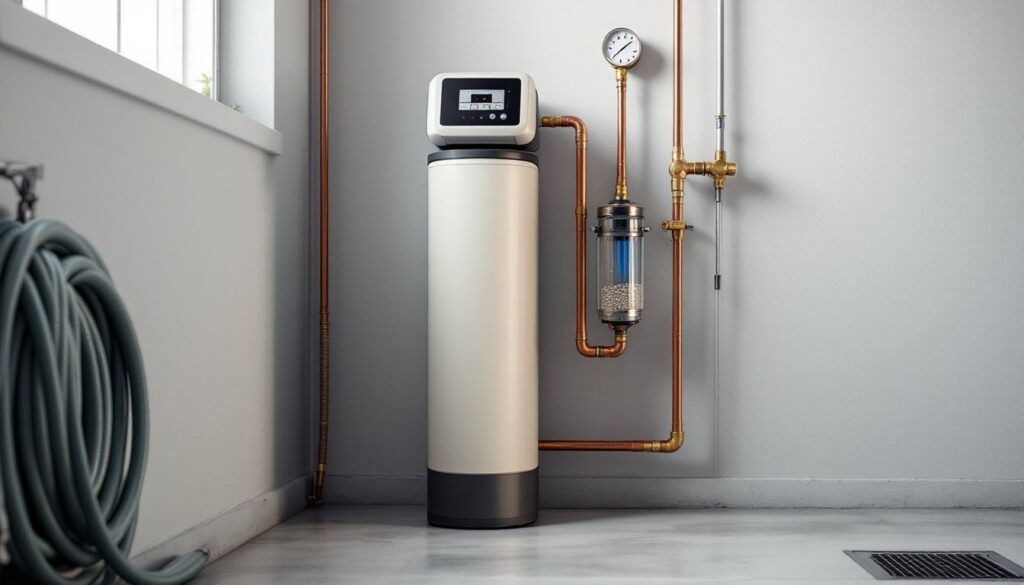
A small water softener is a scaled-down version of a standard ion-exchange system designed to fit tight installations. Most compact models range from 27 to 32 inches tall and 12 to 16 inches in diameter, compared to full-size units that can exceed 50 inches in height. Even though their smaller footprint, they operate on the same principle: hard water enters the resin tank, where sodium ions on resin beads swap places with calcium and magnesium ions (the minerals that cause hardness). The softened water flows to your fixtures, while the hardness minerals stay trapped on the resin.
When the resin becomes saturated, the unit enters a regeneration cycle. Brine (salt water from the built-in or separate brine tank) flushes through the resin, replacing calcium and magnesium with fresh sodium ions and sending the minerals down the drain. Compact units typically use demand-initiated regeneration, they monitor actual water usage rather than running on a timer, which conserves both salt and water. The smallest water softener models often integrate the brine tank into the mineral tank housing or use a separate but stackable design to minimize floor space.
Some alternative systems marketed as compact solutions include salt-free and magnetic conditioners. These don’t remove hardness minerals: instead, they attempt to alter mineral structure to reduce scale. True softening requires ion exchange, so if you’re testing water hardness with a kit and want measurable reduction in grains per gallon (GPG), an ion-exchange compact water softener is the proven route.
Why Choose a Compact Water Softener for Your Home?
Space constraints are the primary driver. Condos, manufactured homes, older houses with minimal mechanical rooms, and apartments with individual softener installs all benefit from a unit that fits where a full-size system won’t. A compact water softener can tuck into a utility closet, under a countertop, or even in a garage corner without blocking walkways or interfering with HVAC equipment.
Smaller households, one to three people, often don’t need the capacity of a 64,000-grain system. A compact unit rated at 24,000 to 32,000 grains handles typical daily water use (around 75 gallons per person) without over-regenerating, which wastes salt and water. Right-sizing the system also means lower upfront cost, often $400 to $800 for the unit itself, compared to $1,000-plus for larger models. Installation complexity drops too: lighter units don’t require reinforced flooring or two people for positioning.
Energy and resource efficiency improve when regeneration cycles match actual demand. Many compact models feature advanced metering valves that track gallons used rather than calendar days, so the softener only regenerates when the resin nears capacity. This cuts salt consumption by up to 30% versus time-clock systems. For homeowners on well water in areas with strict wastewater discharge rules, minimizing brine discharge is a real advantage.
Finally, mobility matters during remodels or moves. A compact water softener weighs 40 to 70 pounds empty, manageable for one person to dolly around, versus 100-plus pounds for full-size tanks. If you’re planning a bathroom addition or moving to a new house, a smaller unit is less hassle to disconnect and relocate.
Top Features to Look for in a Small Water Softener
Grain capacity is the starting point. Multiply your household’s daily water usage by the hardness level in GPG to estimate daily grain removal. A two-person household using 150 gallons per day with 10 GPG hardness needs 1,500 grains removed daily. A 24,000-grain unit would regenerate roughly every 16 days, while a 32,000-grain model stretches that to 21 days. Longer intervals mean less salt and fewer gallons sent to the drain, but you don’t want to under-size and force nightly regeneration.
Demand-initiated regeneration (DIR) is non-negotiable for efficiency. The control valve uses a meter to track water flow and calculates remaining capacity in real time. When capacity drops below a threshold, the unit schedules regeneration during low-use hours (typically 2 a.m.). Avoid calendar-based timers: they regenerate whether you’ve used 100 gallons or 1,000, wasting resources.
Integrated or stackable brine tanks save floor space. Some compact designs nest the salt storage inside the main mineral tank, while others use a separate slim tank that sits beside or on top of the mineral tank. Confirm the brine tank capacity, at least 20 to 30 pounds of salt storage, so you’re not refilling weekly. Look for models with a salt-level indicator or transparent tank walls to monitor supply at a glance.
Bypass valve and shut-off valves simplify maintenance. A built-in bypass lets you isolate the softener for service without cutting off water to the house. Ball valves on inlet and outlet ports make cartridge or resin replacement straightforward. NSF/ANSI Standard 44 certification confirms the unit meets performance and safety benchmarks for household water softeners: it’s the industry seal of approval.
Finally, check the warranty. Quality compact units come with a five to ten-year valve warranty and a separate resin tank warranty. Cheaper models may skimp on valve materials, leading to leaks or failed regeneration cycles within two years. Spending an extra $100 upfront for a robust valve often pays back in avoided service calls.
Best Places to Install a Compact Water Softener
Install as close to the main water line entry point as practical, after the pressure regulator and before any branches to fixtures or appliances. This treats all household water except exterior hose bibs (which don’t need softening) and any drinking-water tap you choose to bypass. Common locations include:
- Basement or crawl space near the water heater. Pair the softener with the water heater so both are accessible for maintenance. Ensure at least 3 inches of clearance around the unit for salt refills and valve access. Concrete floors are ideal: if installing on wood joists, verify the span can support the unit’s operating weight (tank plus water).
- Utility closet or mechanical room. Wall-mount or floor-install depending on plumbing layout. Compact units fit closets as narrow as 18 inches wide if you stack the brine tank or use an integrated design. Leave enough vertical clearance to lift the salt bag, typically 36 inches minimum above the brine tank opening.
- Garage. Protect the unit from freezing if the garage is unheated: most softeners are rated for 40°F minimum operating temperature. Insulate exposed inlet and outlet pipes and consider a freeze alarm. Garages are convenient for salt deliveries but may require a longer drain line run to a laundry sink or exterior cleanout.
You’ll need a 120V GIAC outlet for the control valve, a floor drain or standpipe within 20 feet for brine discharge, and adequate water pressure (25 to 80 psi). If pressure exceeds 80 psi, install a pressure-reducing valve upstream, high pressure accelerates wear on seals and can cause the valve to malfunction. Route the drain line with a 1/2-inch air gap to prevent backflow: many codes require this to avoid contaminating potable water if the drain backs up.
Avoid installing in direct sunlight or near high-heat sources (furnace, water heater flue) that can degrade plastic tanks and seals. Check local plumbing codes, some jurisdictions require a permit for any modification to the main water line, and a few restrict brine discharge to sanitary sewers rather than septic systems.
How to Determine the Right Size for Your Household
Start by testing your water hardness. Hardware stores and home centers sell test strips for under $10, or request a free test kit from a local water-treatment dealer. Results come in GPG or parts per million (ppm): divide ppm by 17.1 to convert to GPG. Moderately hard water runs 3.5 to 7 GPG, hard water is 7 to 10.5 GPG, and very hard exceeds 10.5 GPG.
Next, estimate daily water consumption. The average person uses 80 to 100 gallons per day, but families with teens, frequent laundry, or irrigation habits can hit 120 gallons per person. Multiply household size by per-capita usage for a daily total. For example, three people at 90 gallons each equals 270 gallons per day.
Calculate daily hardness removal: multiply daily gallons by GPG. Using the example above with 10 GPG hardness: 270 gallons × 10 GPG = 2,700 grains per day. Now factor in a reserve capacity of 20 to 30% to avoid running out of soft water before regeneration. A unit rated at 27,000 grains would handle this household comfortably (27,000 ÷ 2,700 = 10-day cycle), while a 24,000-grain model would regenerate every 8 to 9 days, still acceptable but less margin for guests or higher-than-normal usage.
Flow rate is the other half of sizing. Compact units typically deliver 4 to 7 gallons per minute (GPM). Peak demand occurs when multiple fixtures run simultaneously, shower, washing machine, and kitchen faucet might total 6 to 8 GPM. If your household regularly maxes out fixtures, confirm the softener’s service flow rate meets or exceeds peak draw: otherwise, you’ll notice pressure drops. Larger families or homes with high-flow showerheads may need a mid-size softener rather than the smallest option.
When in doubt, consult local water-quality experts or use manufacturer sizing calculators available online. Over-sizing by one capacity tier rarely hurts, regeneration intervals lengthen and efficiency improves, but under-sizing forces frequent cycles and shortens resin life.
Maintenance Tips to Keep Your Small Water Softener Running Smoothly
Refill salt before the tank empties. Most compact brine tanks hold 30 to 50 pounds: check the level monthly and top off when it drops to the quarter-full mark. Use solar salt pellets or evaporated salt pellets rated for water softeners, not rock salt, which leaves insoluble residue. Pellets dissolve cleanly and minimize bridging (a hardened salt crust that blocks brine flow). Store extra bags on a pallet in a dry area to prevent clumping.
Clean the brine tank annually. Shut off water, unplug the unit, and bypass the softener. Empty remaining salt, then scoop out any sludge or undissolved sediment at the bottom. Scrub the tank walls with warm water and a stiff brush, no detergent, which can foul the resin. Rinse thoroughly and refill with fresh salt. This simple step prevents salt bridging and keeps brine concentration consistent.
Inspect the venturi and injector every six months. These small orifices draw brine into the resin tank during regeneration: sediment or iron buildup can clog them, causing incomplete cycles. Unscrew the venturi cover (usually on the control valve body), remove the screen and nozzle, and rinse under running water. Use a toothpick or fine wire to clear any deposits, don’t force it or you’ll scratch the surfaces.
Check the control valve settings after power outages. Many compact units use a capacitor to retain programming during brief outages, but extended losses may reset the clock. Verify the regeneration time is still set for low-use hours and that the hardness setting matches your water test. Incorrect settings trigger premature or delayed regeneration, wasting salt or delivering hard water.
Sanitize the resin bed annually if you’re on well water or notice a musty odor. Pour one cup of household bleach (unscented, 5.25% sodium hypochlorite) into the brine tank, then manually trigger a regeneration cycle. The bleach flushes through the resin, killing iron bacteria and biofilm. Run a second regeneration with plain water to rinse residual chlorine. Wear gloves and safety glasses during this process.
Replace the resin bed every 10 to 15 years, or sooner if water remains hard even though adequate salt and proper settings. Resin beads degrade from chlorine exposure, iron fouling, or mechanical wear. Replacement involves draining the tank, unscrewing the distributor tube, pouring out old resin, and refilling with new beads, manageable for a confident DIYer but often worth hiring a plumber if you’re not comfortable working with pressurized plumbing.
Keep a maintenance log, date of salt refills, brine tank cleanings, and any performance issues. Patterns like increasing salt usage or shorter regeneration intervals signal problems before they cause a full breakdown.
Conclusion
A compact water softener brings full-scale performance to tight spaces without compromise. By matching grain capacity to household demand, prioritizing demand-initiated regeneration, and keeping up with straightforward maintenance, homeowners can enjoy soft water, extended appliance life, and reduced scale buildup, all from a unit that fits where larger systems can’t. Take accurate measurements of your installation area, test your water hardness, and choose a model with proven NSF certification to ensure years of reliable service.