Most bathroom cleaning products promise miracles but deliver mediocre results, leaving homeowners scrubbing harder and longer than they should. Soap scum, hard water deposits, and grimy grout lines can turn bathroom maintenance into a dreaded chore. Zep Shower Tub and Tile Cleaner has built a reputation among DIYers and homeowners as a heavy-duty solution that tackles bathroom grime without the elbow grease marathon. This guide walks through what makes Zep effective, how to use it properly, which surfaces it’s safe for, and how it stacks up against other popular cleaners on the market.
Table of Contents
ToggleKey Takeaways
- Zep Shower Tub and Tile Cleaner uses an acidic formula with phosphoric acid to dissolve soap scum, hard water stains, and mineral deposits without heavy scrubbing.
- For best results, spray Zep on damp surfaces, allow 2-5 minutes dwell time depending on soil level, and rinse thoroughly to prevent surface etching.
- Never use Zep on natural stone, unsealed grout, painted surfaces, or aluminum, as the acidic formula can cause permanent damage to these materials.
- Zep outperforms gentler cleaners like Scrubbing Bubbles and Method on heavy buildup but is more versatile than specialty products like CLR for mixed bathroom grime.
- Always ventilate the bathroom, wear protective gloves and eyewear, and never mix Zep with bleach or ammonia to avoid toxic fumes.
- A single 32-ounce bottle costs $5-$8 and handles multiple deep-cleaning sessions for an average bathroom, making it an affordable alternative to professional cleaning services.
What Is Zep Shower Tub and Tile Cleaner?
Zep Shower Tub and Tile Cleaner is an acidic-based bathroom cleaner formulated specifically to dissolve soap scum, hard water stains, rust, and body oils from non-porous bathroom surfaces. Unlike general-purpose cleaners that rely primarily on surfactants, Zep uses a blend of acids (including phosphoric acid) to break down mineral deposits and organic buildup chemically rather than mechanically.
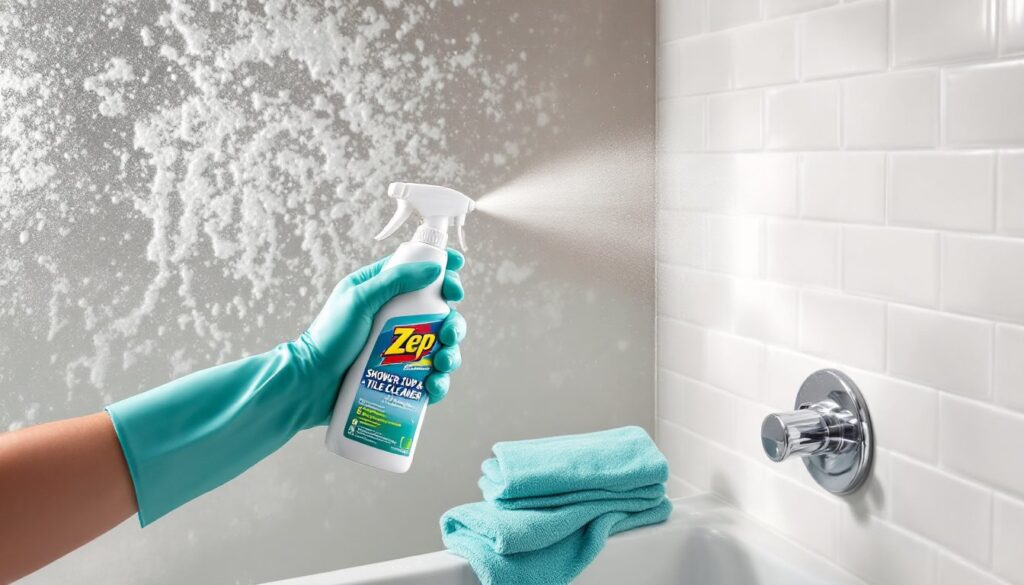
The product comes in a 32-ounce spray bottle with a trigger applicator, making it easy to target problem areas without transferring to another container. The formula is designed as a spray-on, wipe-off cleaner, no scrubbing required for most applications, though heavily soiled areas benefit from a few seconds of agitation with a non-abrasive pad.
Zep is part of a broader line of professional-grade cleaning products that have crossed over into the consumer market. The company manufactures industrial and commercial cleaners, which explains why their retail formulas tend to be stronger than typical grocery-store brands. Homeowners who’ve dealt with stubborn bathroom buildup often turn to Zep after milder products fail to deliver results.
Key Benefits of Using Zep for Bathroom Cleaning
Zep’s formulation offers several advantages that make it a go-to for serious bathroom cleaning:
Dissolves soap scum without heavy scrubbing. The acidic formula breaks down the waxy, filmy layer that builds up from bar soap and body wash. Most users report that a spray and short dwell time loosens even thick accumulations.
Removes hard water stains and mineral deposits. If the bathroom has white, chalky buildup around faucets, showerheads, or on glass doors, Zep’s acid content targets calcium, magnesium, and lime scale effectively. This makes it especially useful in areas with hard water.
Works fast. Dwell time, the period the cleaner sits on the surface before wiping, is typically 2-3 minutes for moderate soil, compared to 10-15 minutes or multiple applications with weaker products.
No heavy fragrance. While Zep has a mild chemical odor (expected with acidic cleaners), it doesn’t rely on perfumes to mask cleaning performance. Homeowners sensitive to strong scents often prefer this over heavily fragranced alternatives.
Affordable and widely available. A 32-ounce bottle typically costs between $5-$8 at home centers and online retailers, and a single bottle handles multiple deep-cleaning sessions for an average-sized bathroom.
How to Use Zep Shower Tub and Tile Cleaner Effectively
Proper application maximizes Zep’s effectiveness and minimizes the risk of surface damage. Follow these steps for best results:
- Ventilate the bathroom. Open windows and turn on the exhaust fan. Acidic cleaners release fumes that shouldn’t be inhaled in enclosed spaces.
- Remove loose debris. Rinse the tub, tile, or shower walls with water to clear hair, dirt, and surface grime. Zep works best when it contacts the actual buildup, not loose dirt.
- Spray evenly. Hold the bottle 6-8 inches from the surface and apply a uniform coating. Don’t oversaturate, a light, even layer is sufficient.
- Let it dwell. For light soil, wait 2 minutes. For heavy soap scum or hard water stains, allow 3-5 minutes. Do not let the product dry on the surface.
- Agitate if needed. Use a non-abrasive sponge or nylon scrub pad on stubborn spots. Avoid steel wool or abrasive pads that can scratch.
- Rinse thoroughly. Flush the surface with water until no cleaner residue remains. Incomplete rinsing can leave a hazy film or cause surface etching over time.
- Dry the surface. Wipe down with a microfiber cloth or squeegee to prevent new water spots from forming.
Best Practices for Tough Soap Scum and Hard Water Stains
When dealing with extreme buildup, a single application may not be enough. For thick soap scum, apply Zep and let it dwell for the full 5 minutes, then agitate lightly with a Magic Eraser-style melamine foam pad or a nylon brush. Rinse and repeat if necessary.
For hard water stains on glass shower doors, spray Zep and immediately follow with a plastic scraper held at a 45-degree angle to lift loosened mineral deposits. This technique works well on vertical surfaces where cleaner tends to run off quickly. Some homeowners report success with a second application after the first rinse, especially on doors that haven’t been cleaned in months.
If rust stains are present (common around metal fixtures or where well water is used), Zep’s formula handles light rust, but heavily oxidized areas may require a dedicated rust remover like Whink or CLR after the initial Zep treatment.
What Surfaces Can You Safely Clean with Zep?
Zep is formulated for non-porous surfaces commonly found in bathrooms. Safe applications include:
- Porcelain tubs and sinks
- Ceramic tile (glazed)
- Fiberglass shower surrounds and tub enclosures
- Glass shower doors and mirrors
- Chrome, stainless steel, and brass fixtures (with caution, test first)
- Acrylic tub and shower surfaces
Do not use Zep on:
- Natural stone (marble, granite, travertine, limestone). The acid will etch and dull the surface permanently.
- Grout (especially unsealed or colored grout). Acidic cleaners can break down grout and alter color. For grout cleaning, use a pH-neutral or alkaline cleaner designed for cementitious materials.
- Painted surfaces. The acid can strip or discolor paint.
- Aluminum. Phosphoric acid can cause pitting or discoloration on aluminum fixtures.
Always spot-test on an inconspicuous area before full application, especially on older fixtures or non-standard materials. Apply a small amount, wait 2 minutes, rinse, and check for discoloration, etching, or surface changes.
For homeowners with natural stone tile or high-end finishes, a pH-neutral cleaner or one designed specifically for stone is the safer choice. Many bathroom cleaning guides from trusted sources like home improvement experts recommend matching cleaner chemistry to surface material to avoid costly damage.
Zep vs. Other Popular Bathroom Cleaners: How Does It Compare?
Homeowners often weigh Zep Shower Tub and Tile Cleaner against other widely available products. Here’s how it stacks up:
Zep vs. CLR (Calcium Lime Rust): Both are acidic, but CLR is specifically formulated for mineral deposits and rust, while Zep balances mineral removal with soap scum dissolution. CLR is slightly more aggressive on hard water stains: Zep is more versatile for general bathroom grime. If the primary issue is limescale, CLR edges ahead. For mixed soil types, Zep is the better all-rounder.
Zep vs. Scrubbing Bubbles: Scrubbing Bubbles relies on surfactants and foaming action rather than acid. It’s gentler and safer on a wider range of surfaces, including some natural stones, but far less effective on heavy soap scum or mineral deposits. Scrubbing Bubbles works well for maintenance cleaning: Zep is for problem-solving.
Zep vs. Tilex Mold & Mildew: Tilex focuses on bleach-based disinfection and mold removal. It doesn’t tackle soap scum or hard water stains effectively. For mold and mildew on grout or caulk, Tilex is the right tool. For surface grime, Zep wins.
Zep vs. Bar Keeper’s Friend: Bar Keeper’s Friend (BKF) is an oxalic acid-based powder that excels at rust and tarnish removal. It’s gentle enough for stainless steel and some stone surfaces but requires manual scrubbing. Zep is faster for large surface areas like shower walls: BKF is better for targeted tough spots.
Zep vs. Method or Mrs. Meyer’s: These eco-friendly brands use plant-based surfactants and avoid harsh acids. They’re safe for nearly all surfaces and have pleasant scents, but they can’t touch Zep’s performance on heavy buildup. Think of them as preventive maintenance: Zep is corrective.
For a deeper look at how various formulations perform in head-to-head testing, reviews from cleaning product evaluations provide side-by-side comparisons based on real-world soil conditions.
Safety Tips and Precautions When Using Zep
Acidic cleaners demand respect. Follow these safety practices every time:
Wear PPE. Use nitrile or rubber gloves to protect skin from chemical burns. If spray mist is likely (especially overhead applications), wear safety goggles. Long sleeves protect arms from splashes.
Ventilate aggressively. Phosphoric acid fumes irritate respiratory passages. An open window isn’t enough, run the exhaust fan throughout application and for 10-15 minutes after rinsing.
Never mix cleaners. Combining Zep with bleach, ammonia, or other bathroom products can produce toxic gases. Use Zep alone, rinse completely, and only then apply a different product if needed.
Keep out of reach of children and pets. Store the bottle in a locked cabinet or high shelf. Accidental ingestion is a medical emergency, call poison control immediately if it occurs.
Rinse immediately if contact occurs. If Zep splashes on skin, flush with water for at least 15 minutes. For eye contact, rinse continuously and seek medical attention.
Test before full application. As mentioned earlier, always spot-test on a hidden area, especially on older or non-standard fixtures.
Dispose of properly. Don’t pour excess cleaner down drains in large quantities. Follow local regulations for household chemical disposal, or dilute heavily before flushing.
Check expiration dates. While Zep has a long shelf life, degraded product may be less effective or behave unpredictably. Replace bottles older than two years.
For households with septic systems, acidic cleaners in moderate amounts (typical bathroom cleaning use) won’t harm the system, but avoid dumping concentrated product directly into drains. If using zep shower cleaner regularly, normal rinse water dilution is safe for septic and municipal sewer systems alike.
Homeowners managing multiple cleaning products often benefit from organizing storage and labeling containers clearly. Resources on home organization strategies emphasize keeping caustic chemicals separate from food-safe or general-purpose products to prevent accidental misuse.
By following these guidelines, Zep Shower Tub and Tile Cleaner becomes a reliable, effective tool in the bathroom cleaning arsenal, one that saves time, reduces physical effort, and delivers professional-grade results without the professional price tag.